The next four anchorages we visited were incredible, one after the other, all remote and each very unique.
Bahia San Gabriel, Isla Espíritu Santo
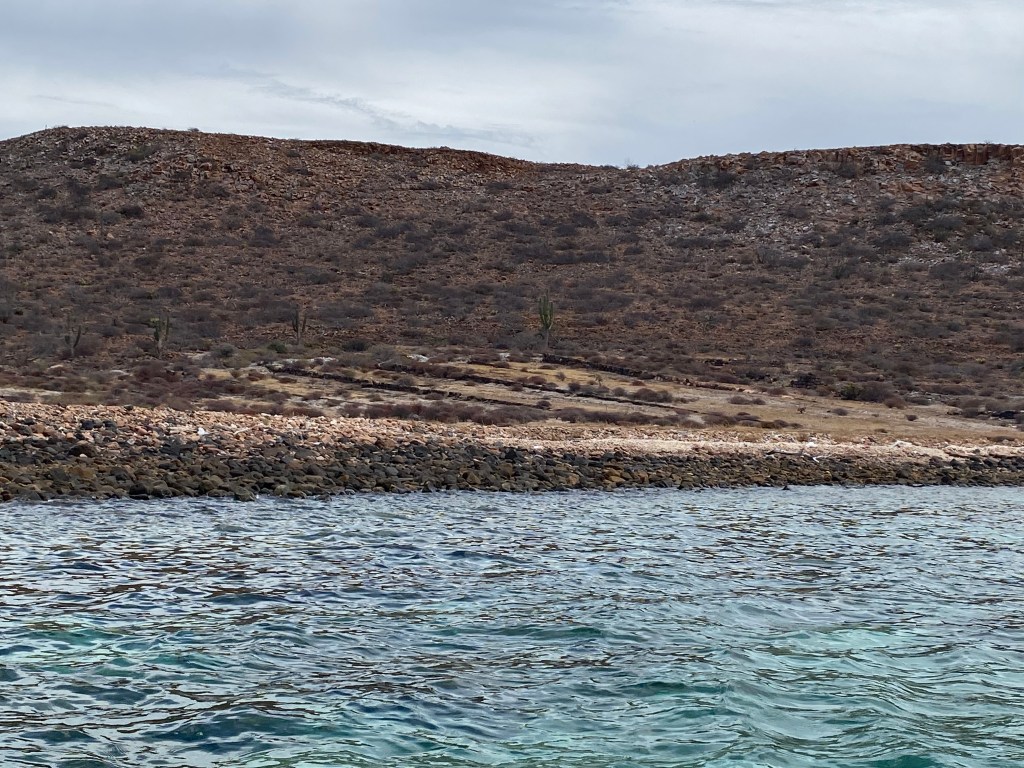
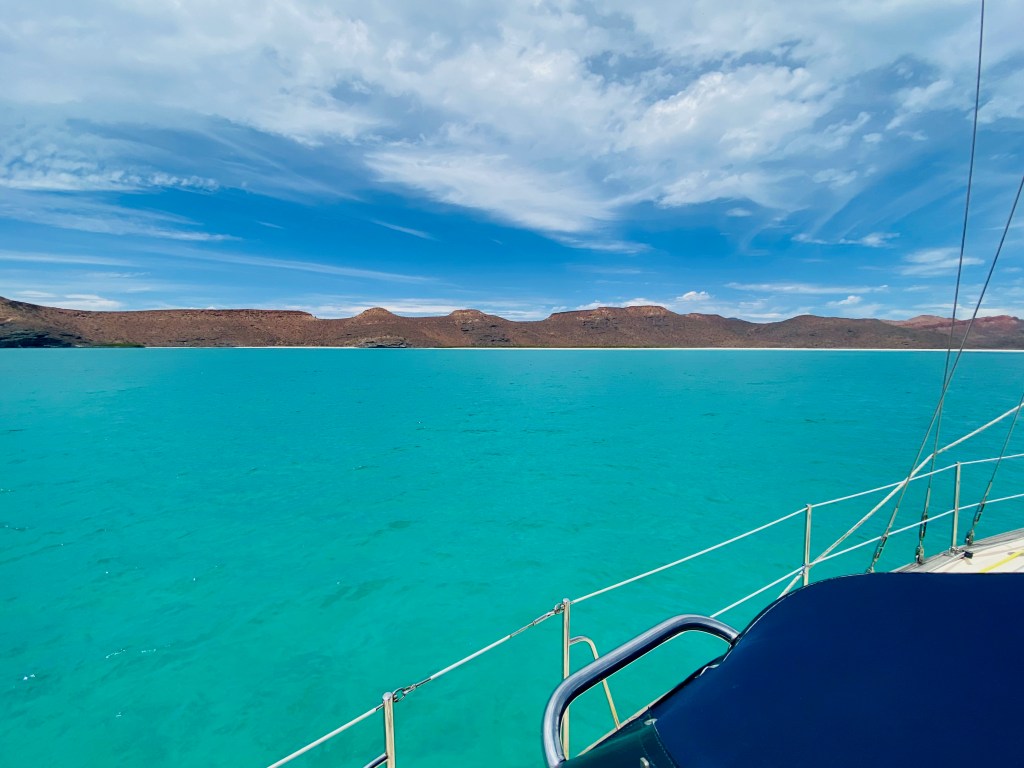
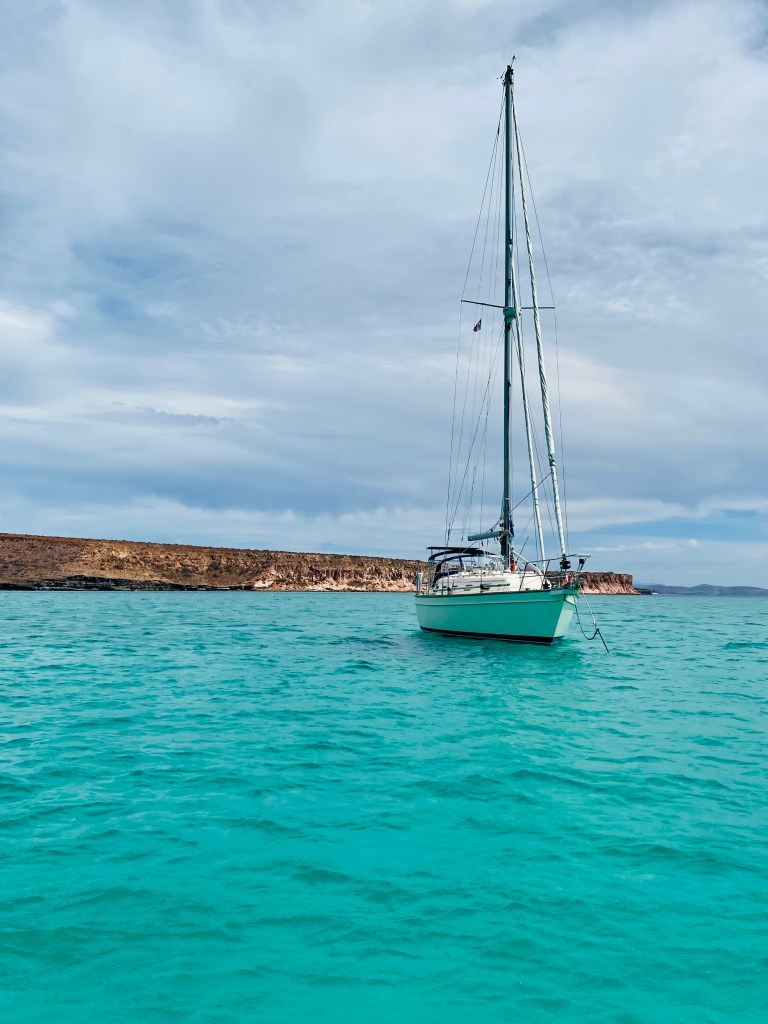
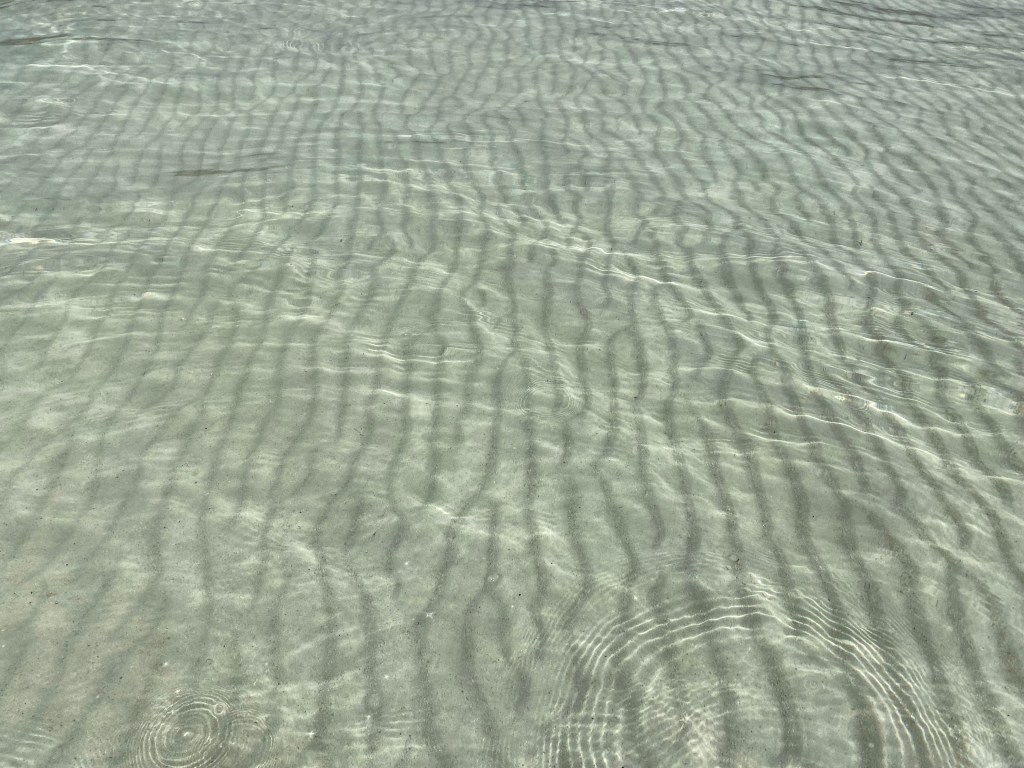
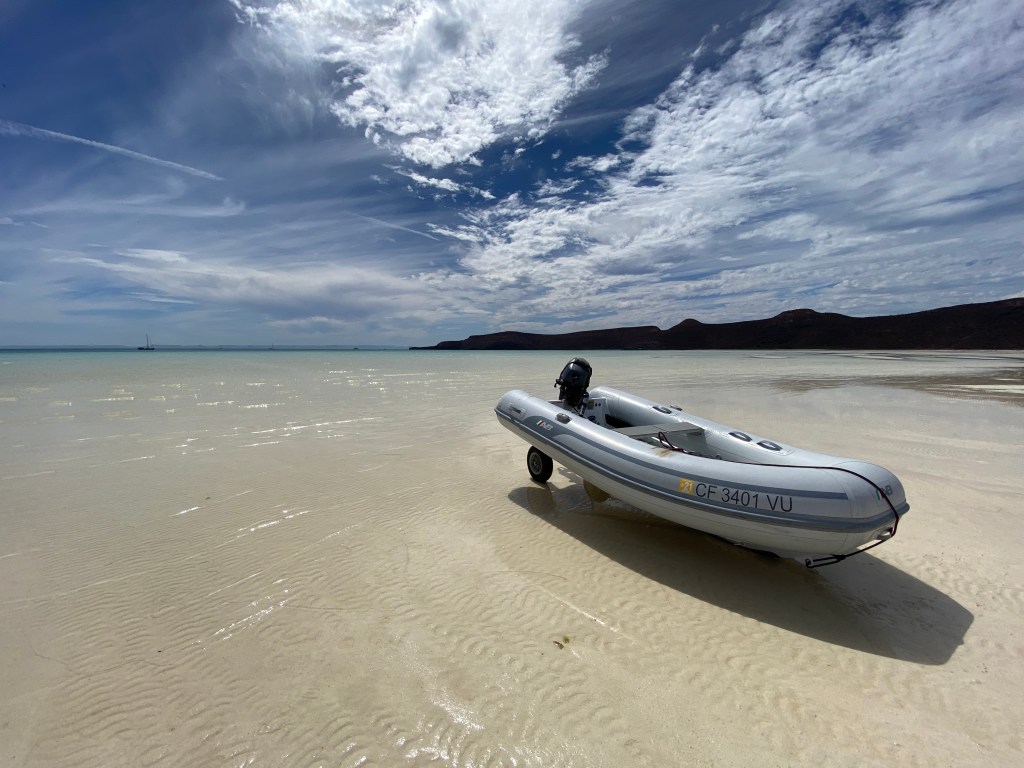
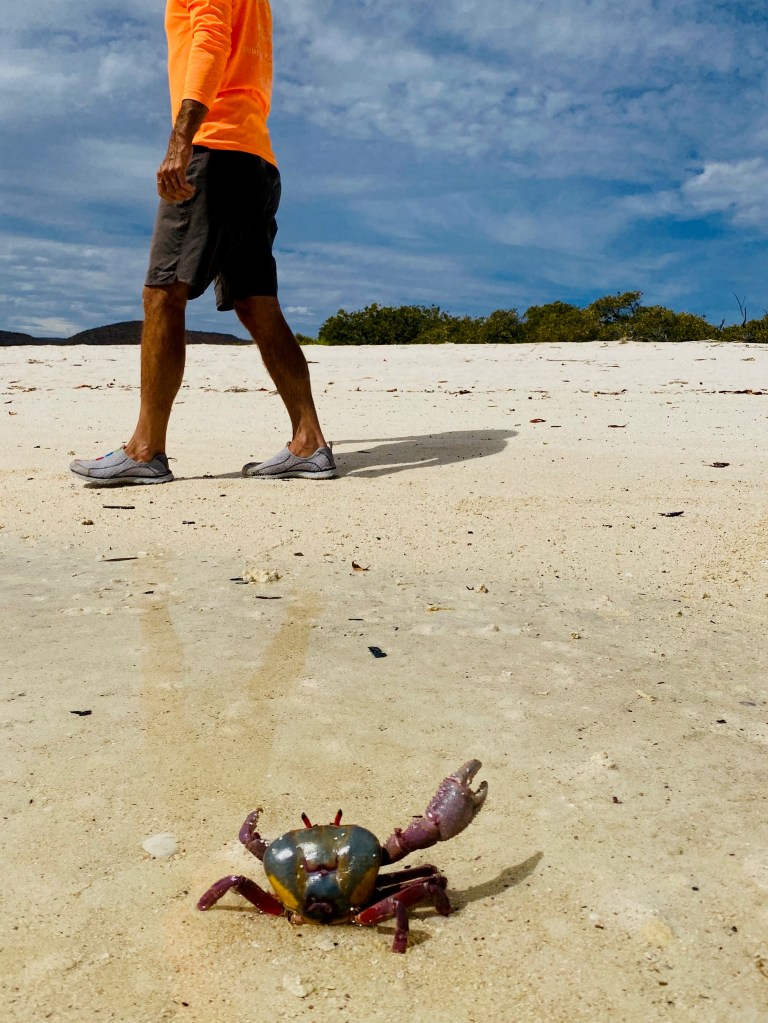
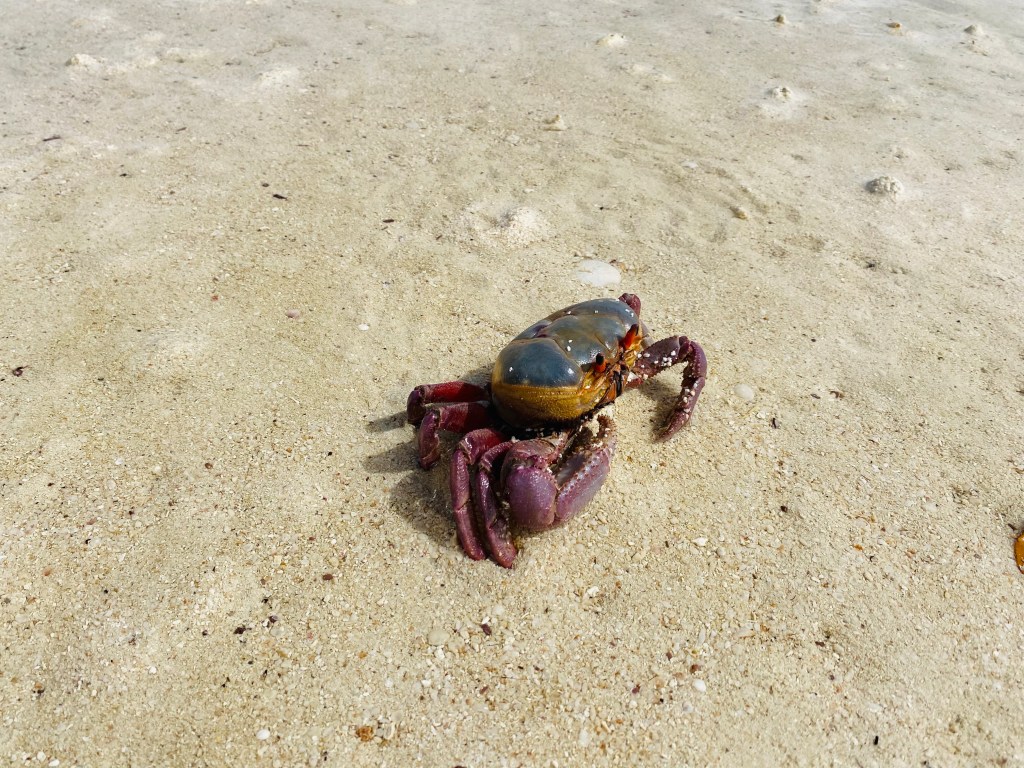
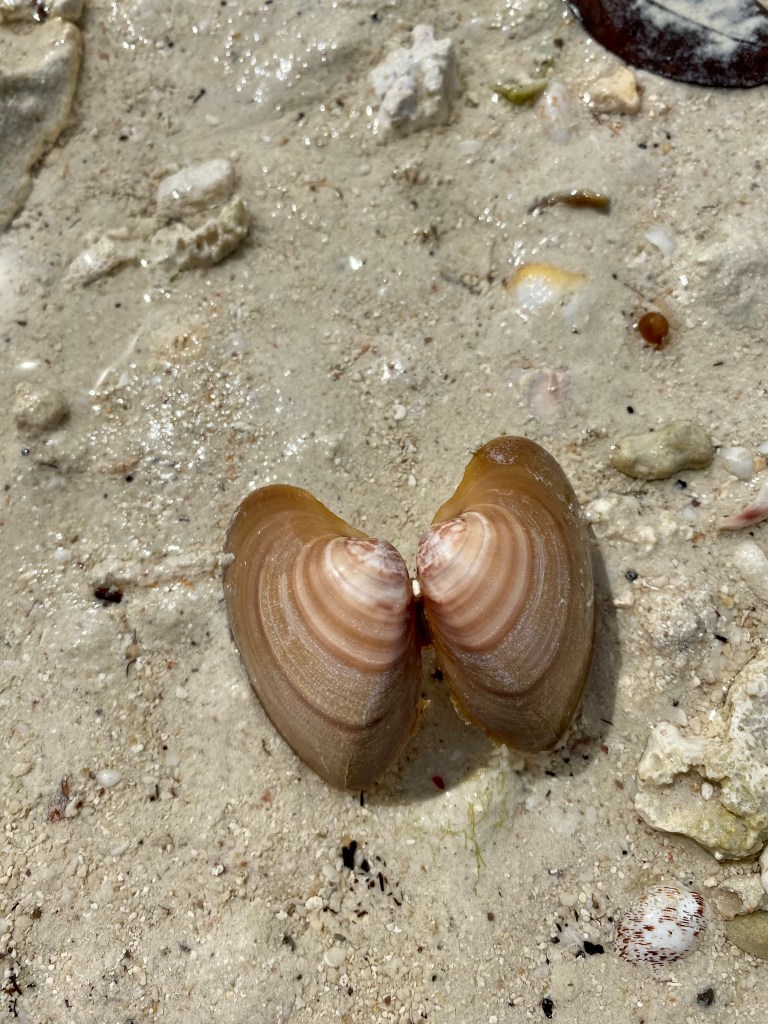
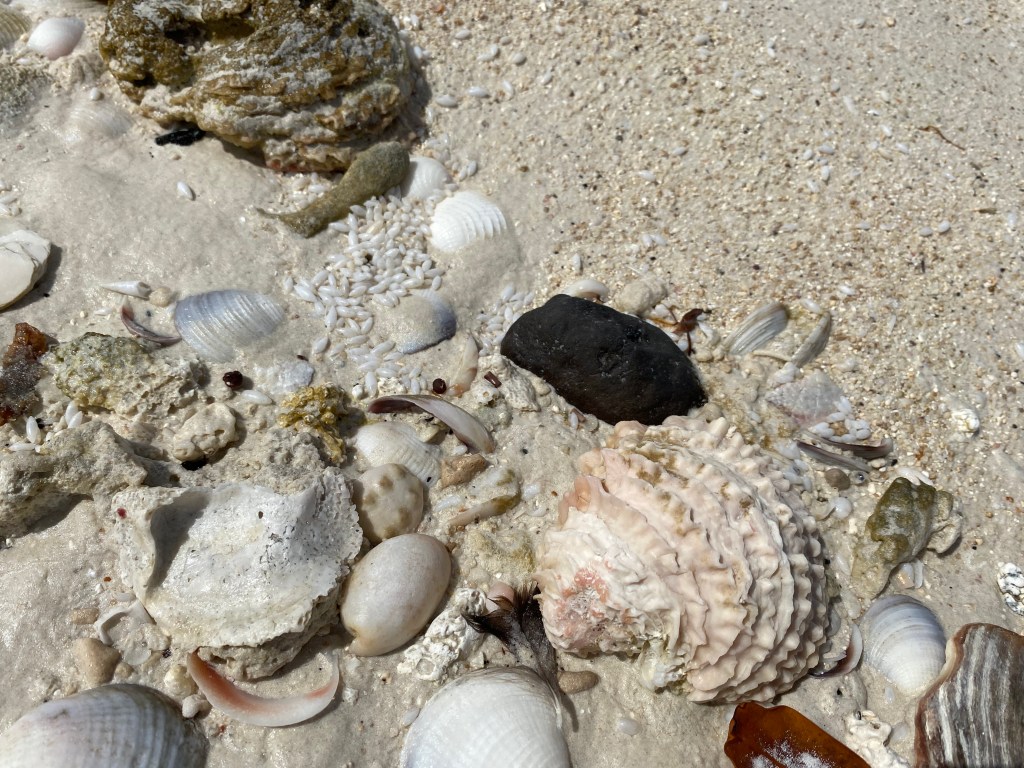
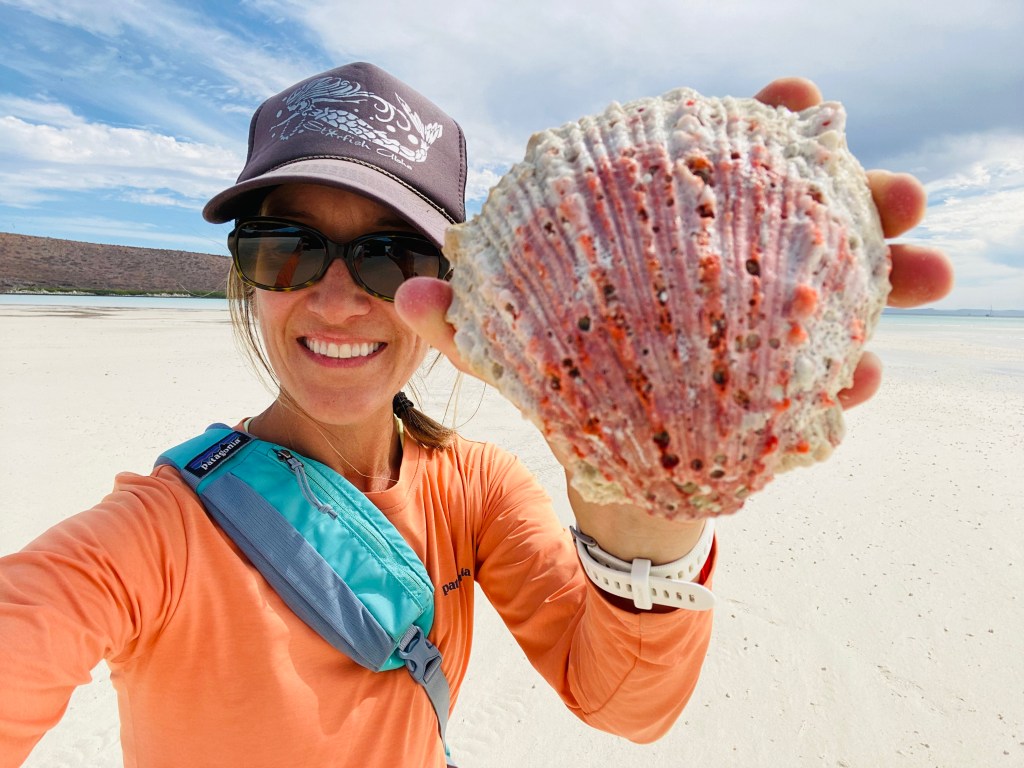
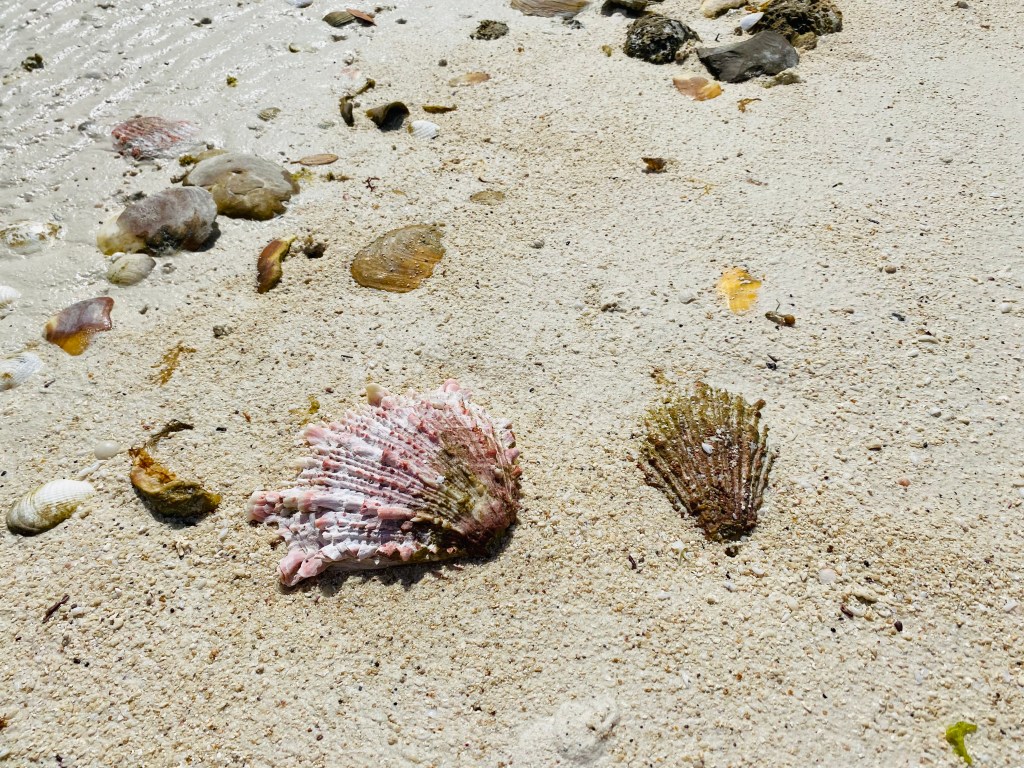
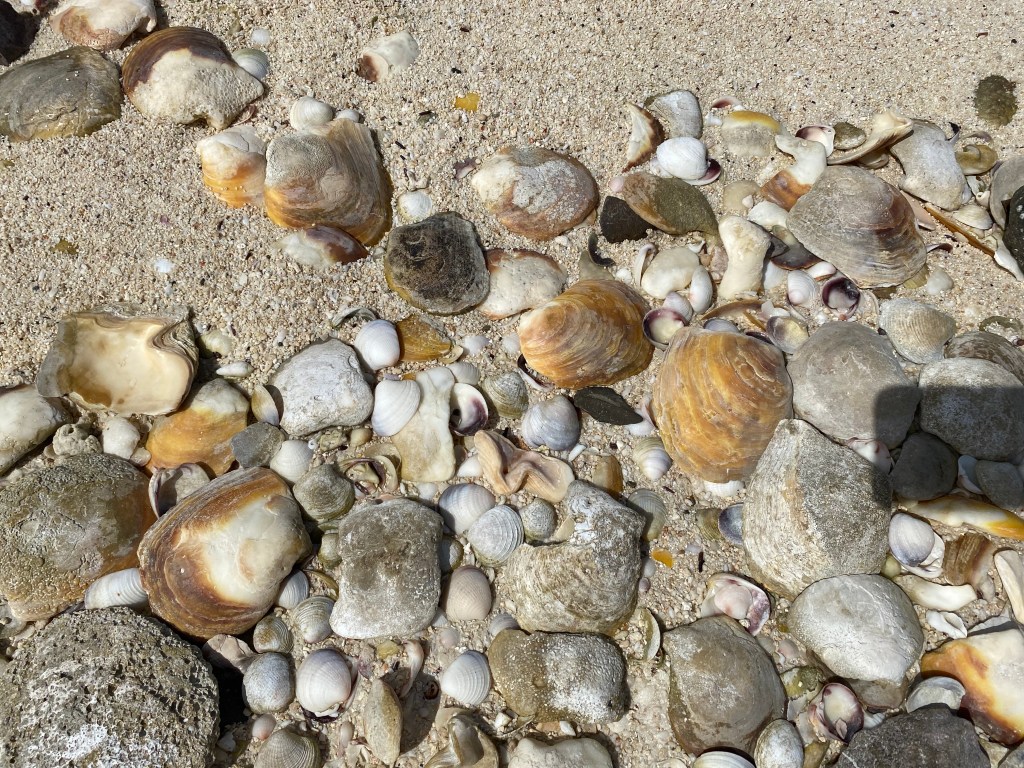
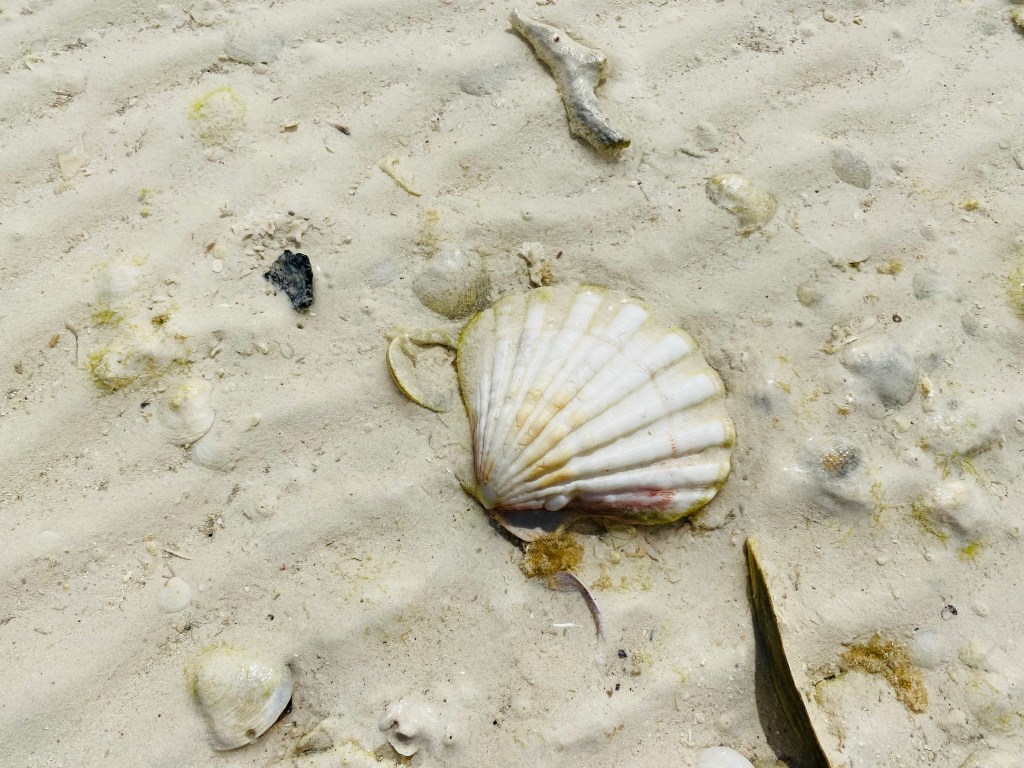
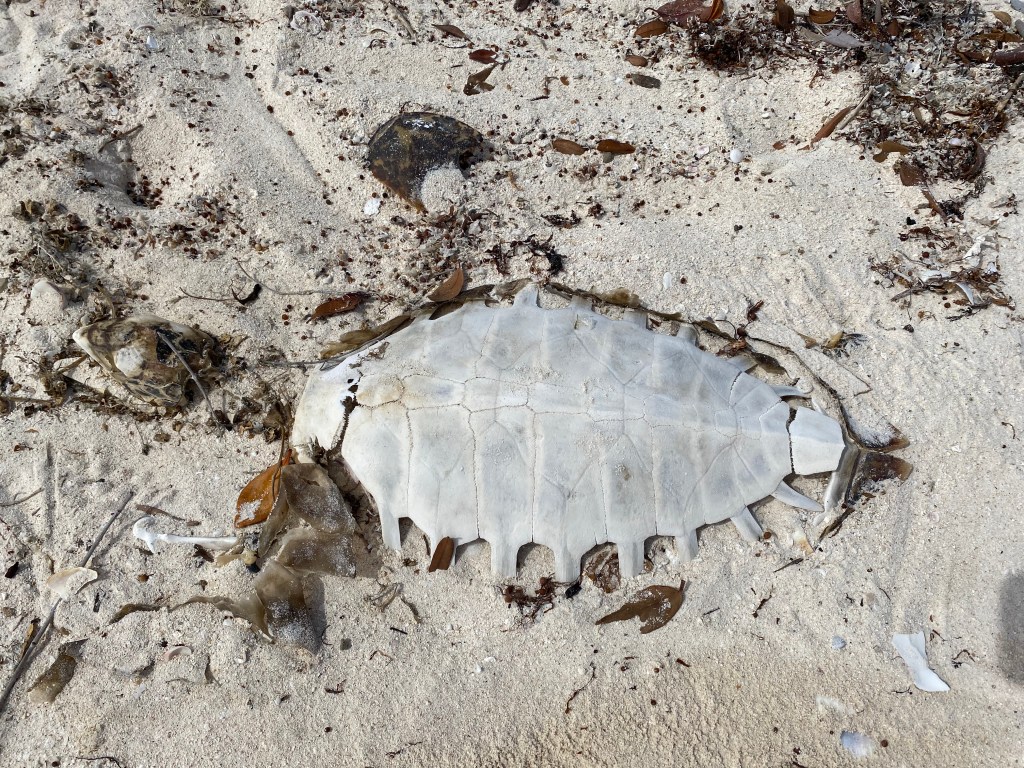
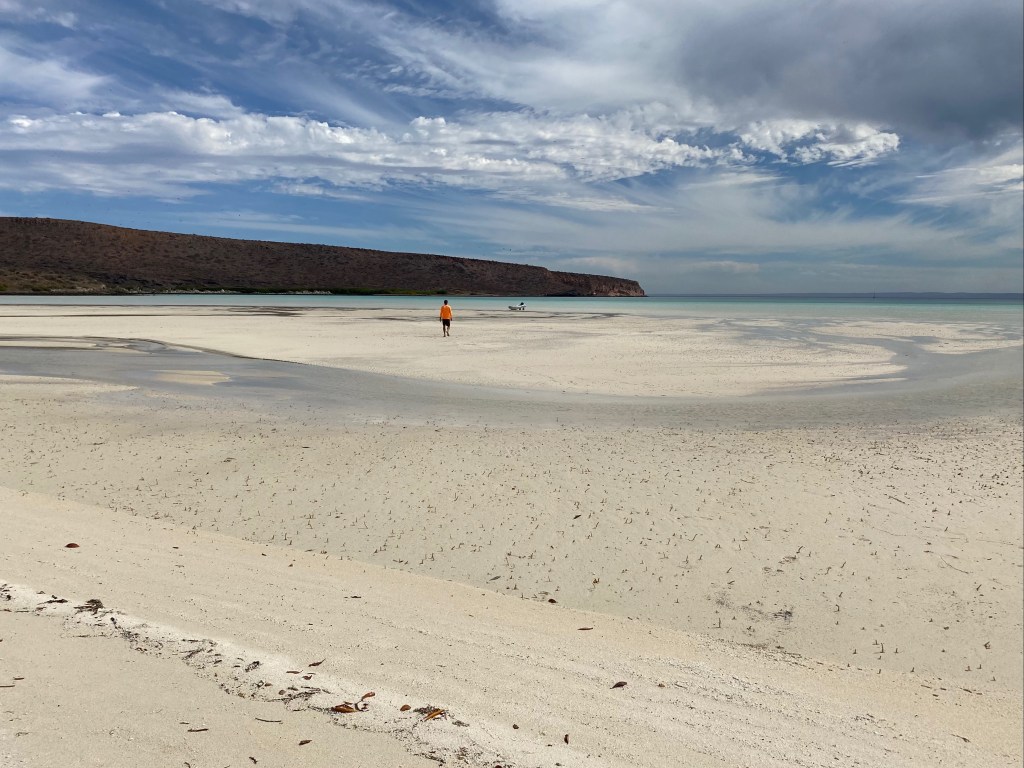
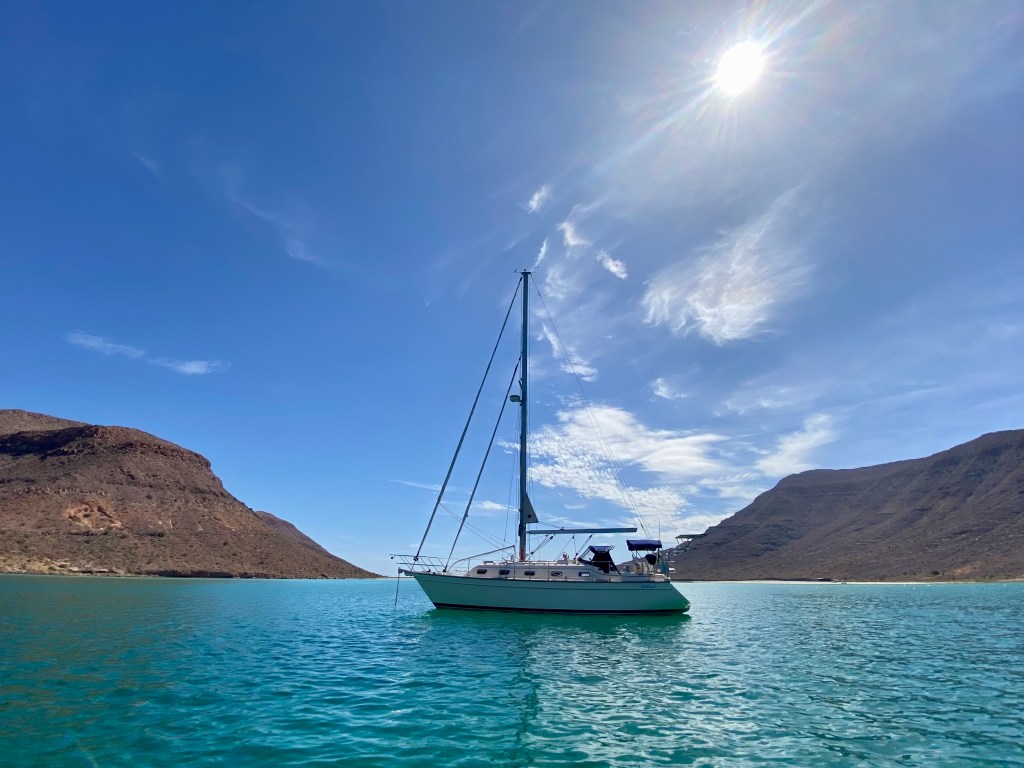
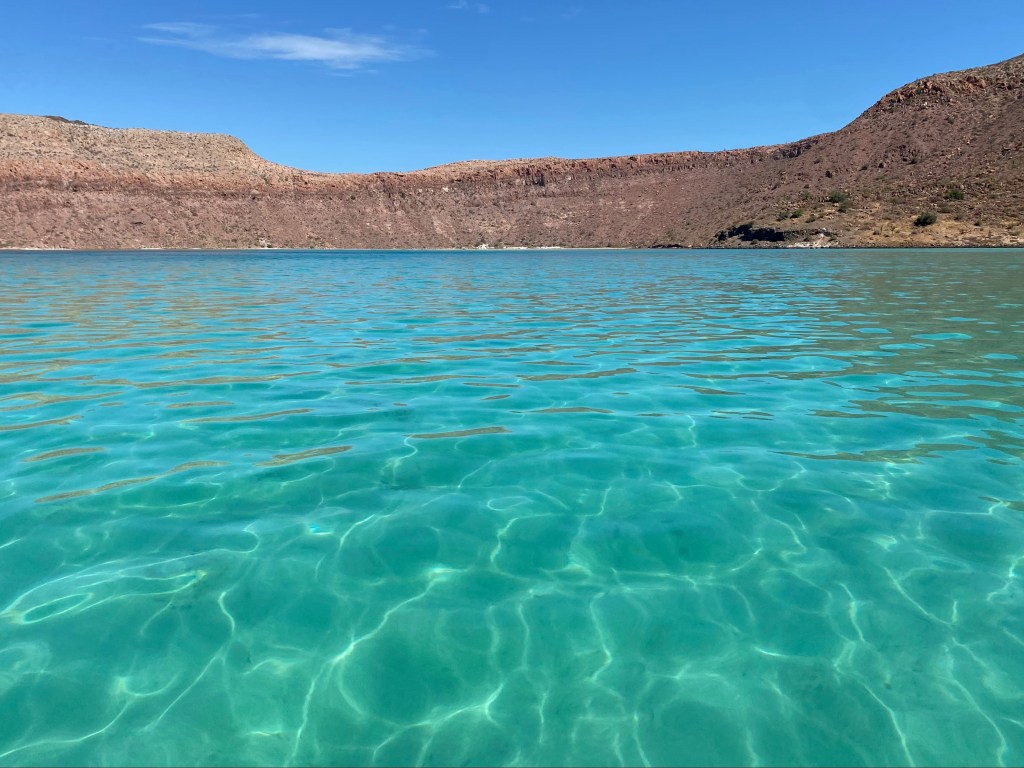
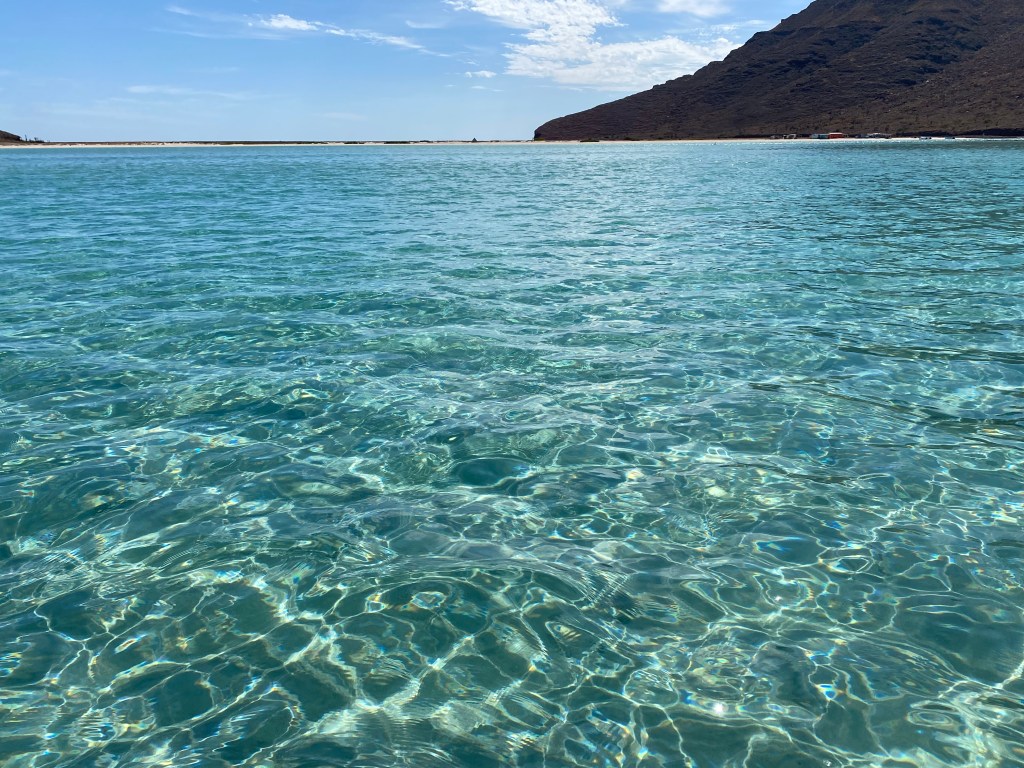
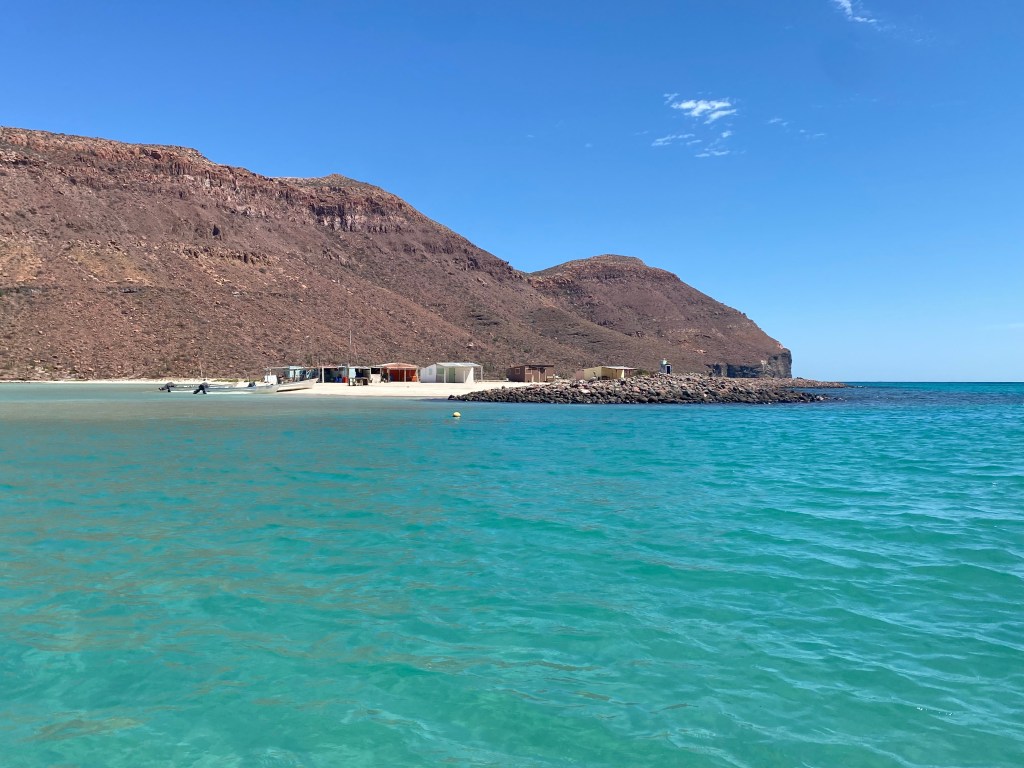
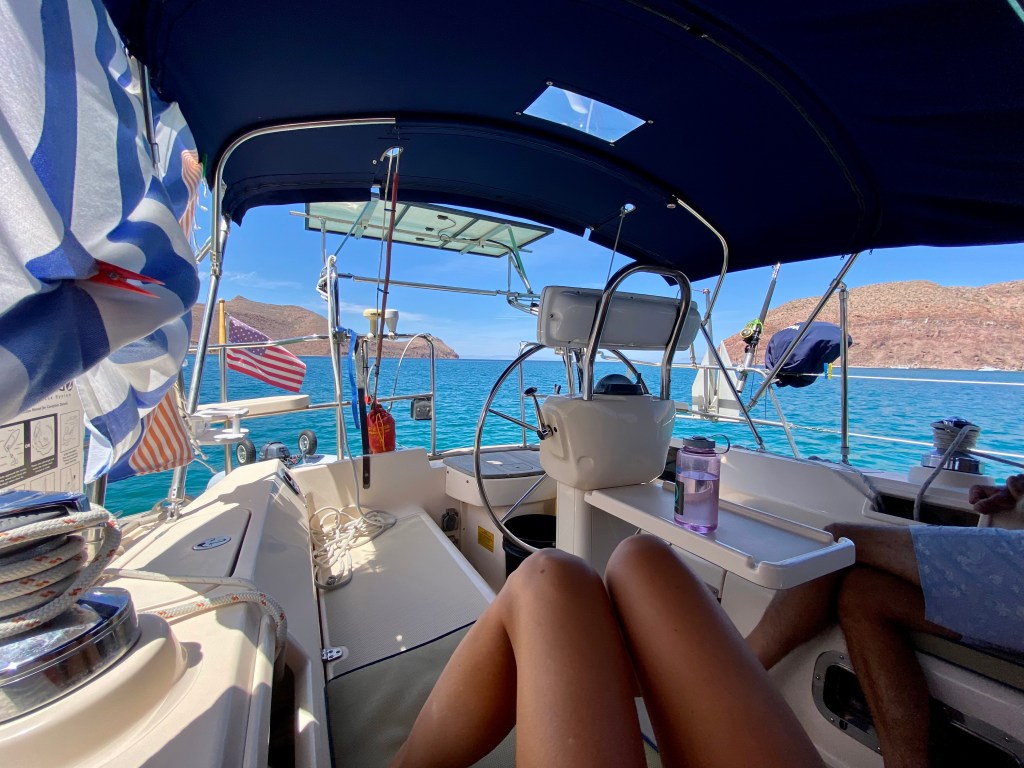
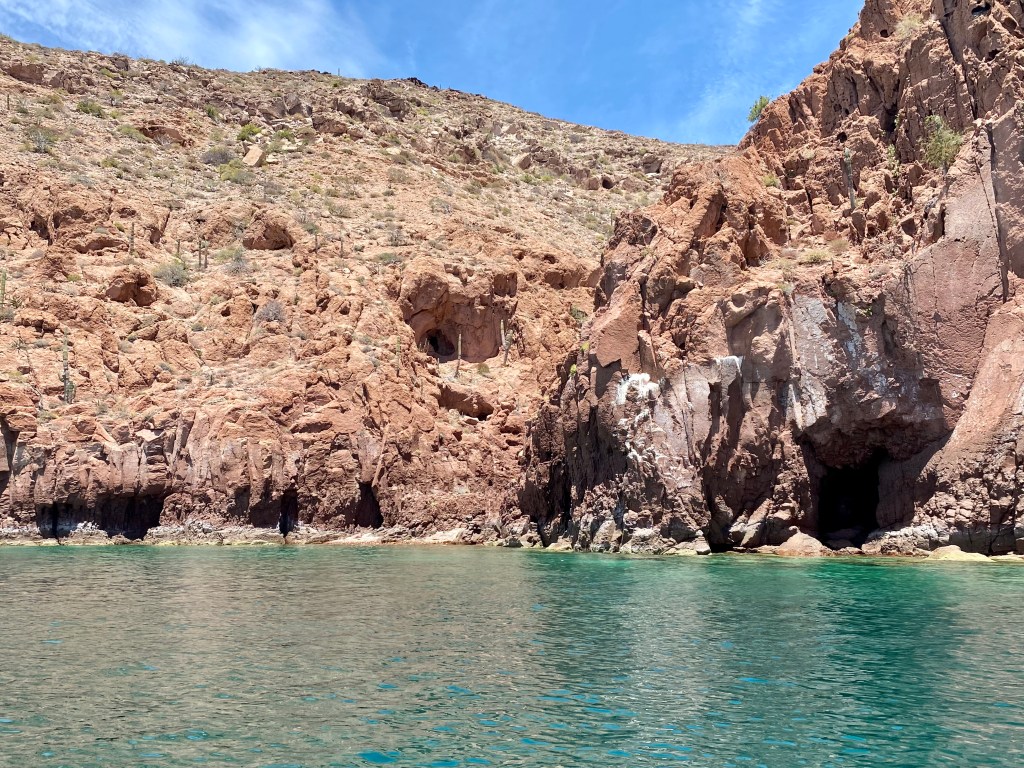
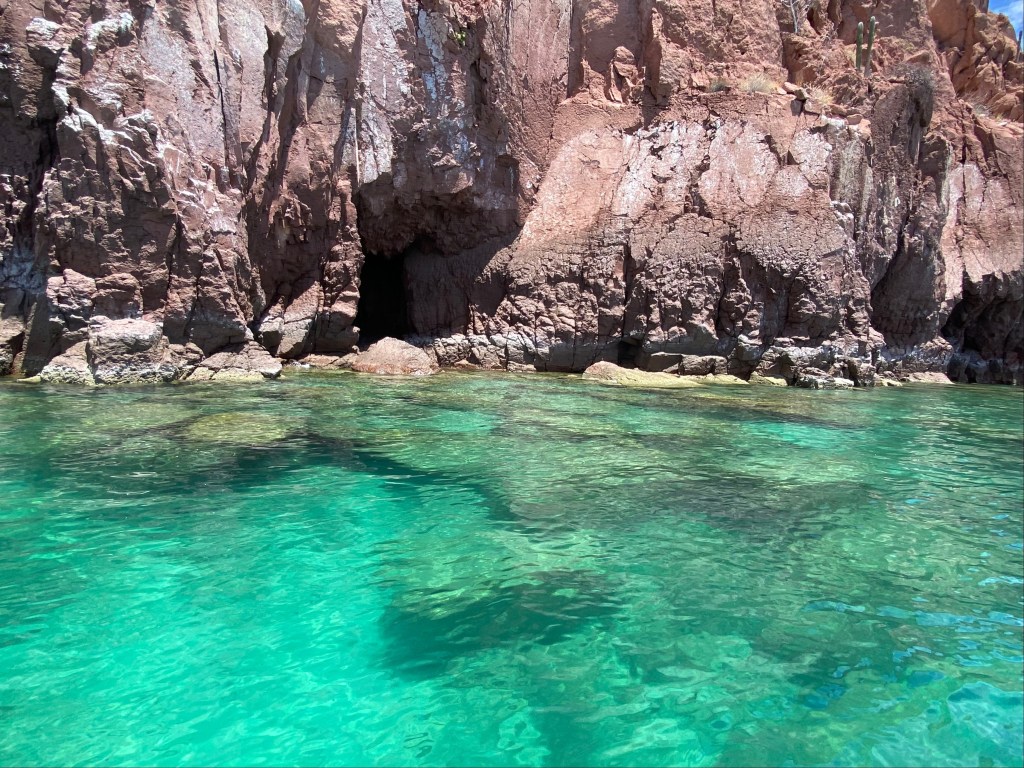
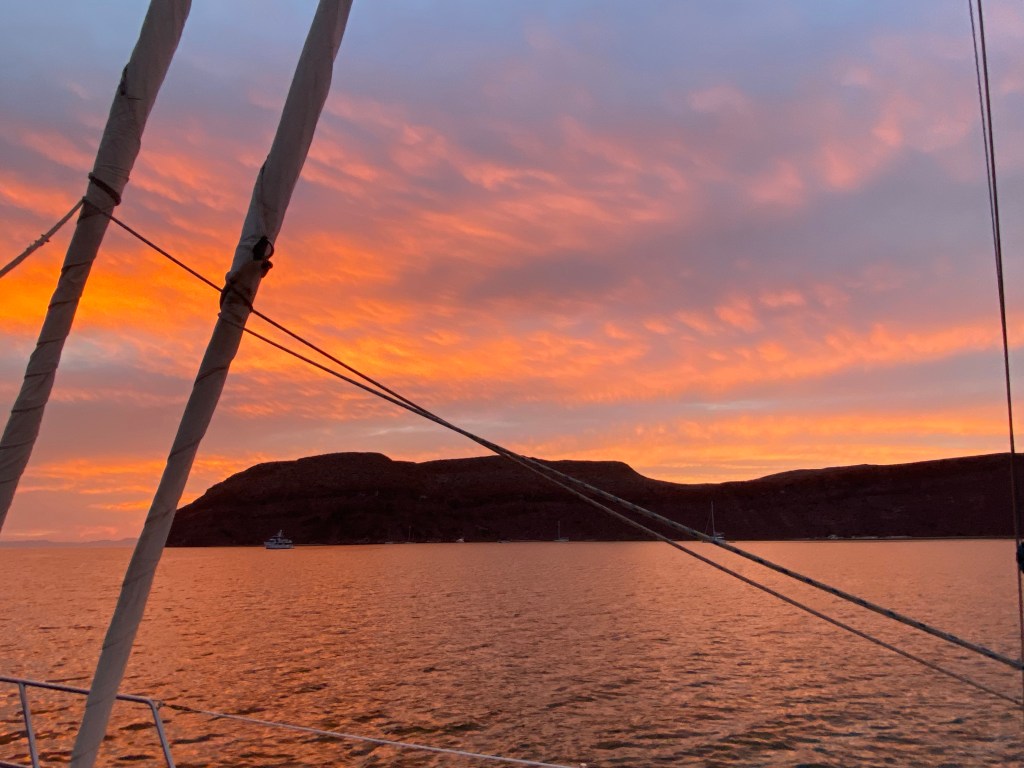
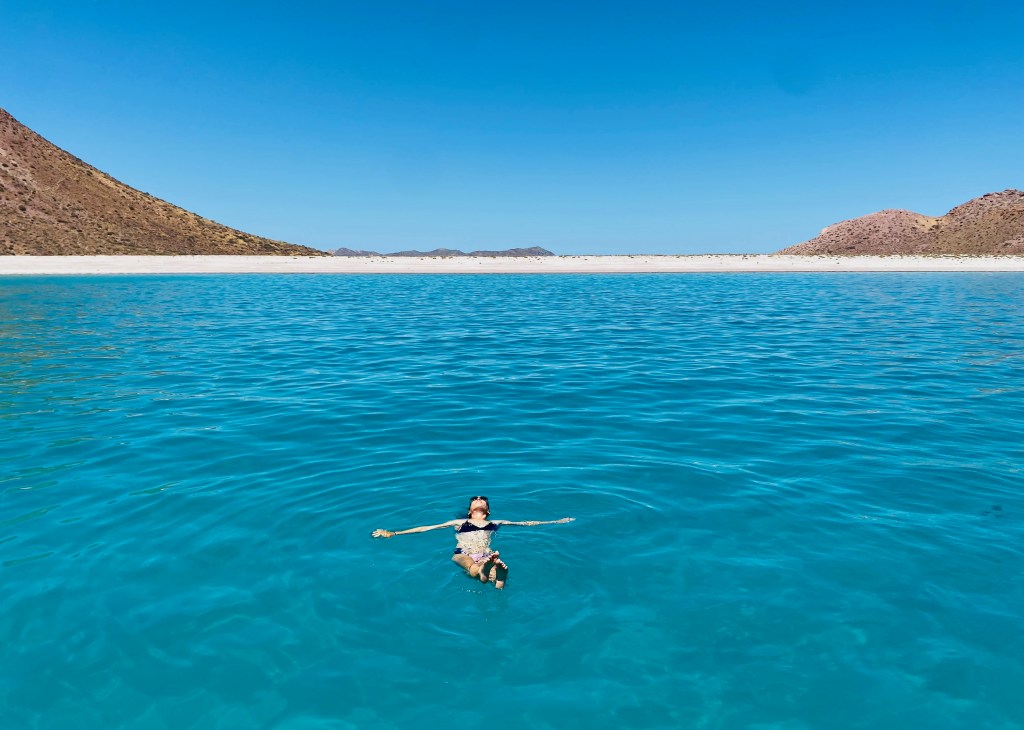
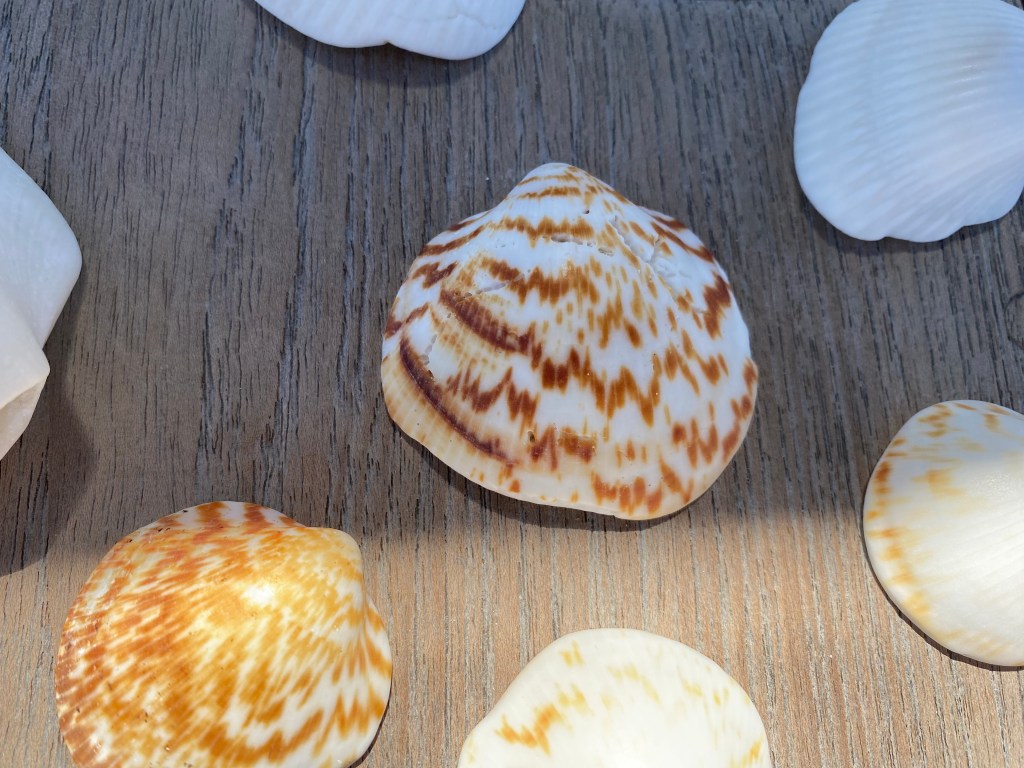
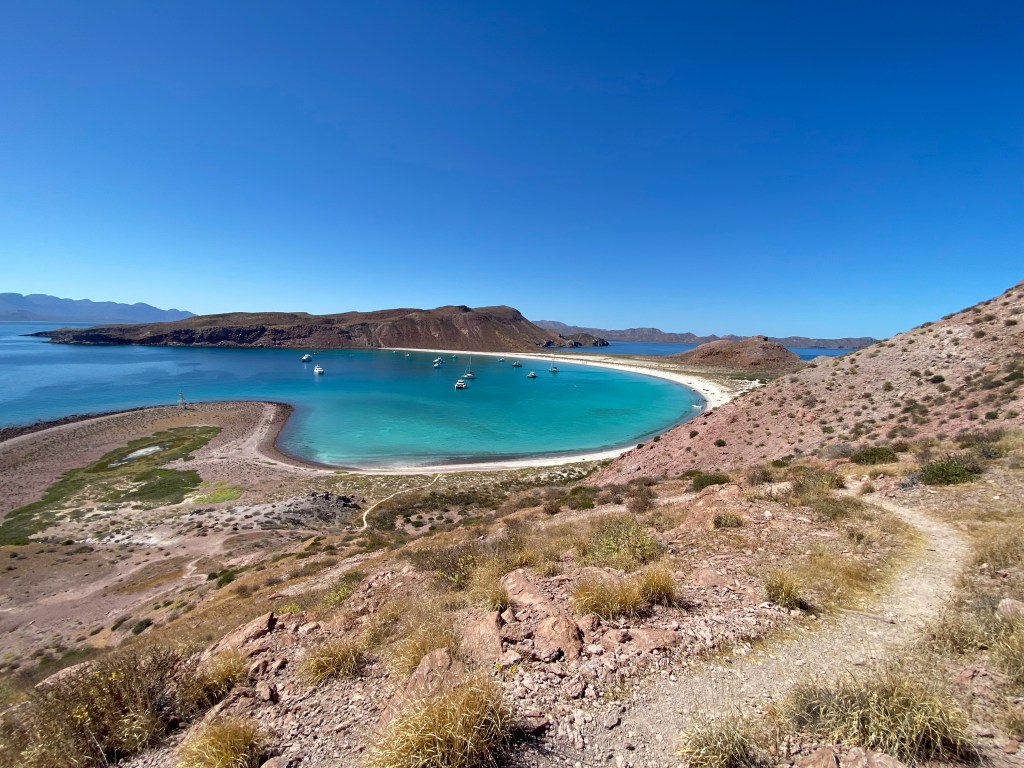
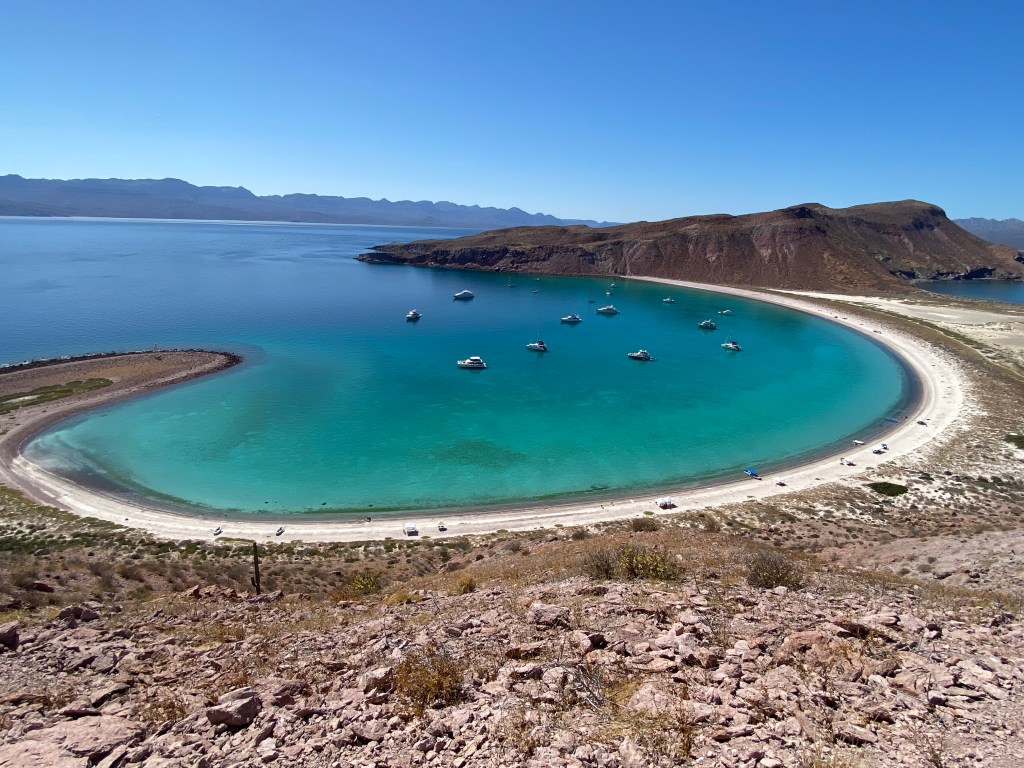
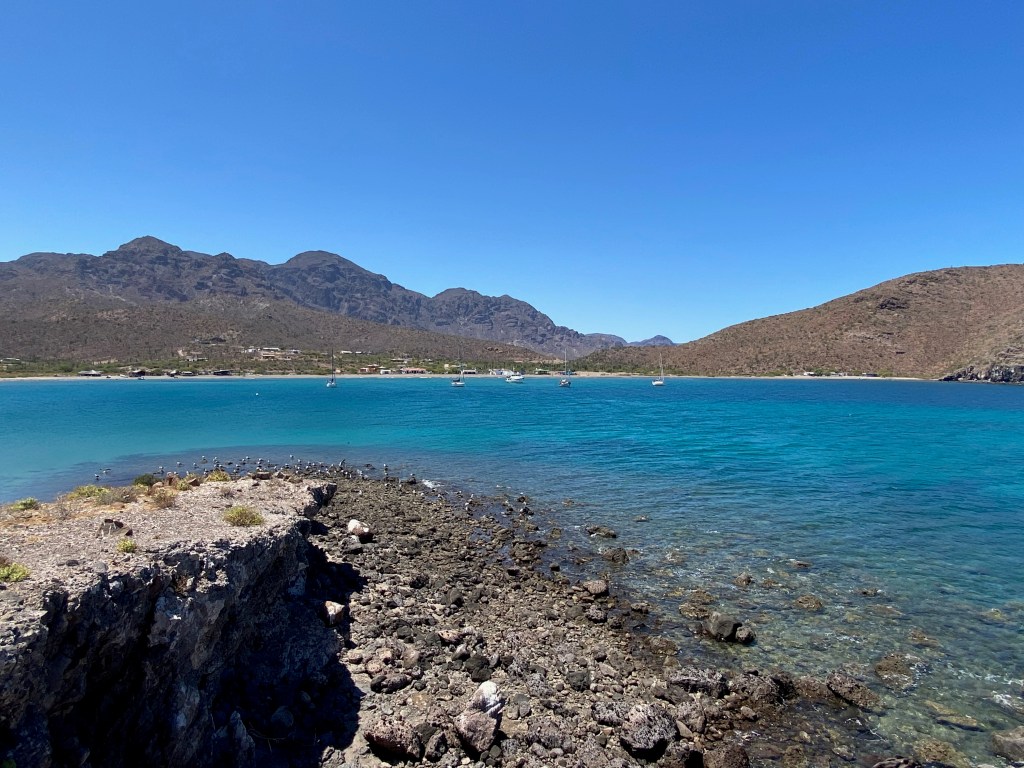
Our first stop after leaving La Paz was back to Isla Espíritu Santo. Bahia San Gabriel was the site for a pearl fishery and the remains of this operation can still be seen on the southern shore. We anchored in the large bay, lowered the dinghy and headed for the white sand beach. It was low tide and we had the entire beach to ourselves. We found beautiful shells, a large crab and the skeleton of a sea turtle completely untouched. While swimming in the crystal clear water back at the boat we saw two large star fish below us. Sitting in the cockpit at night, along with the four other boats at anchor, we looked up at the stars and enjoyed the total stillness and quiet. The only sound we heard was a sea lion that came up to take a breath.
Caleta Partida, Isla Partida
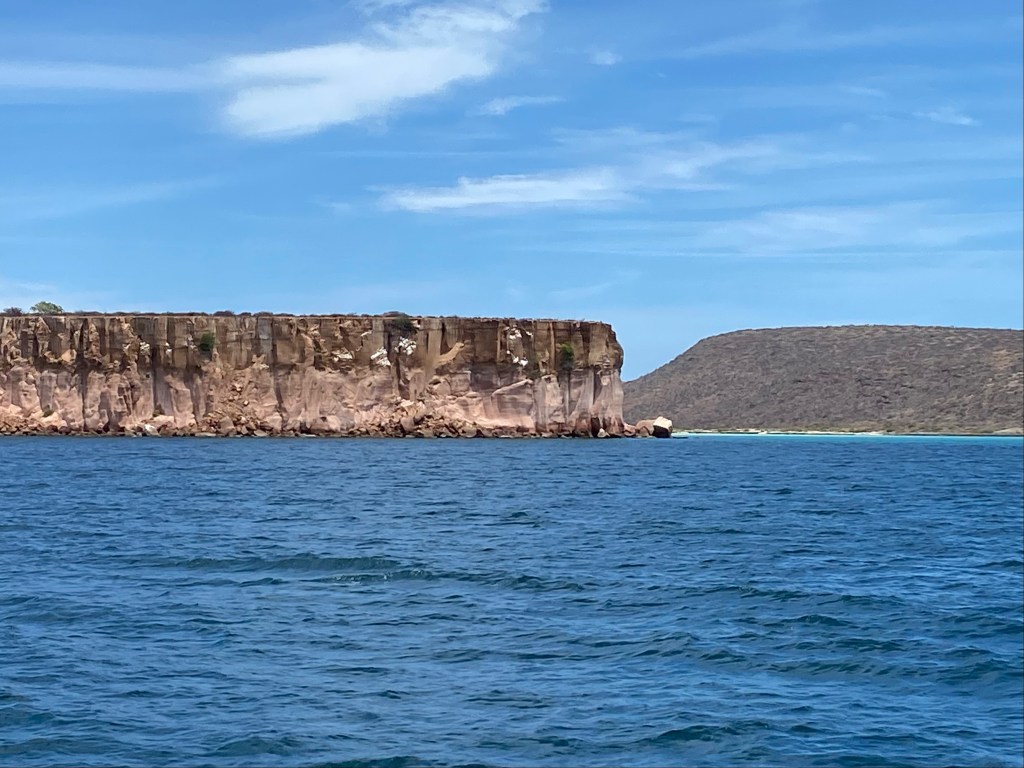
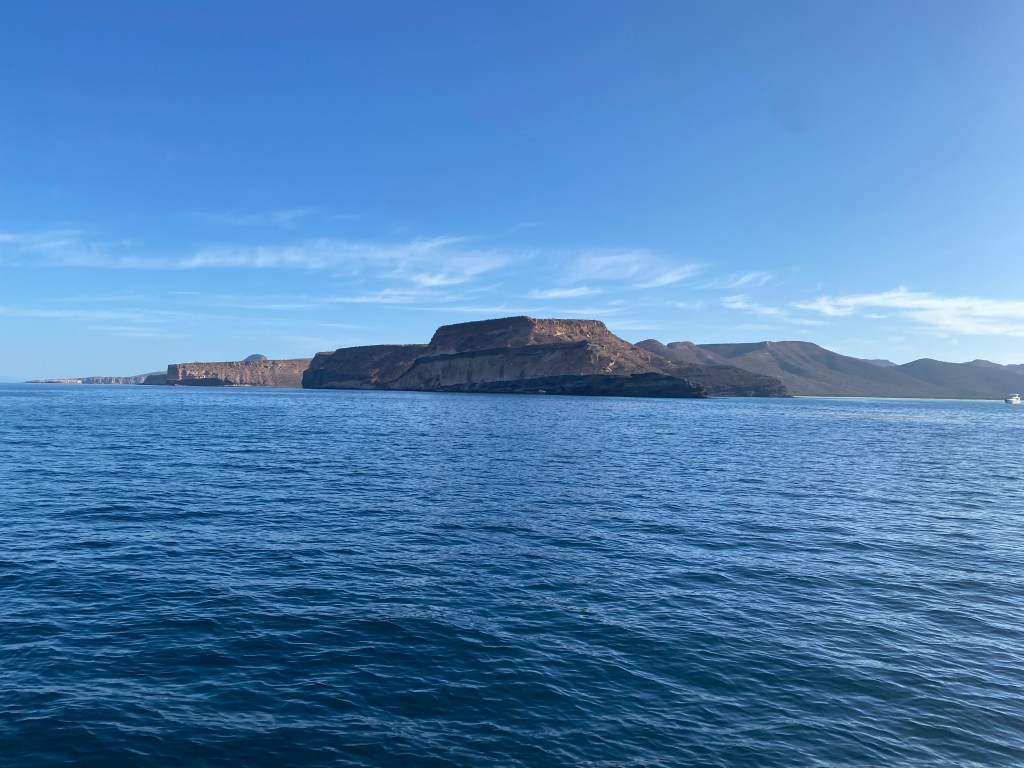
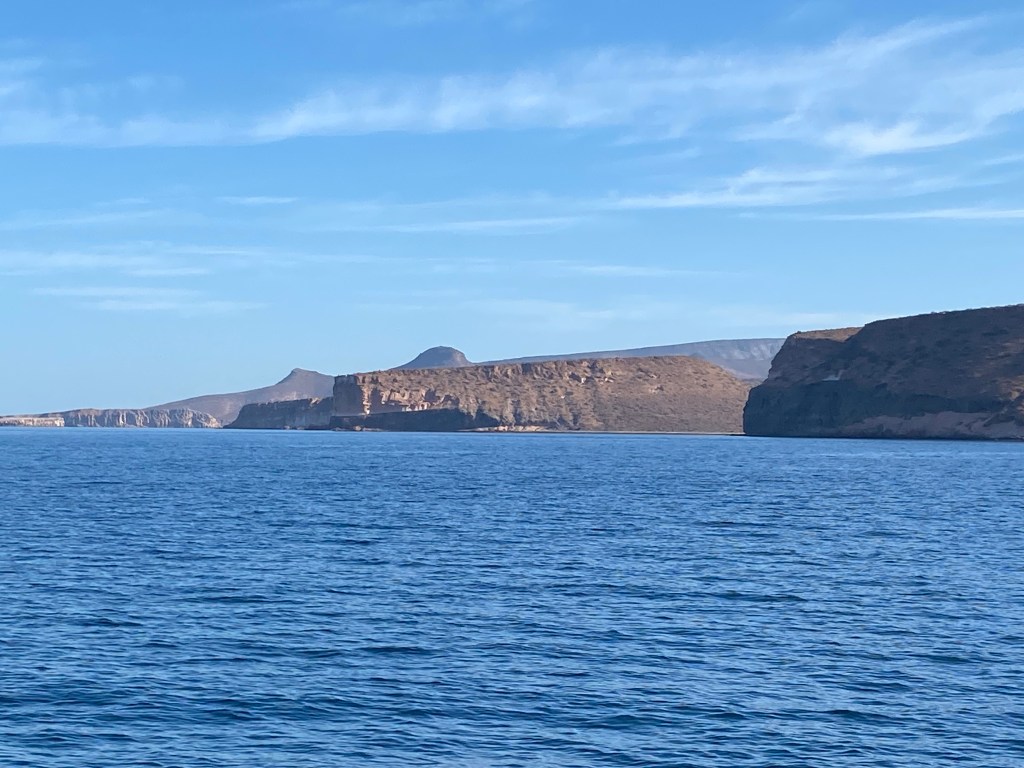
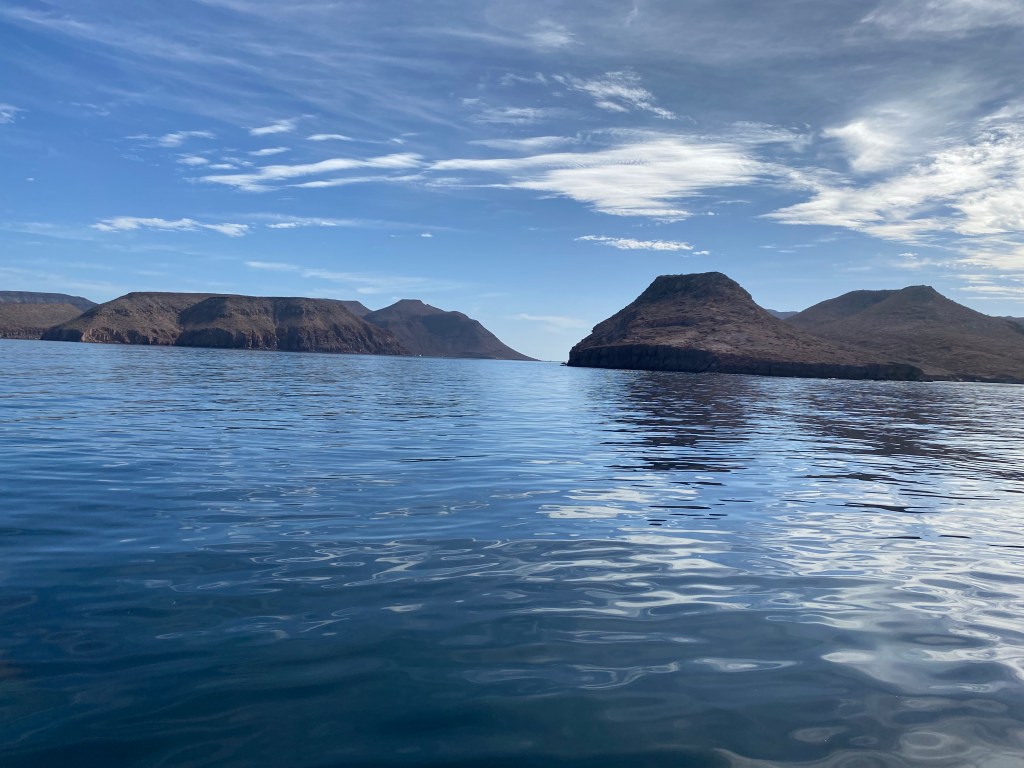
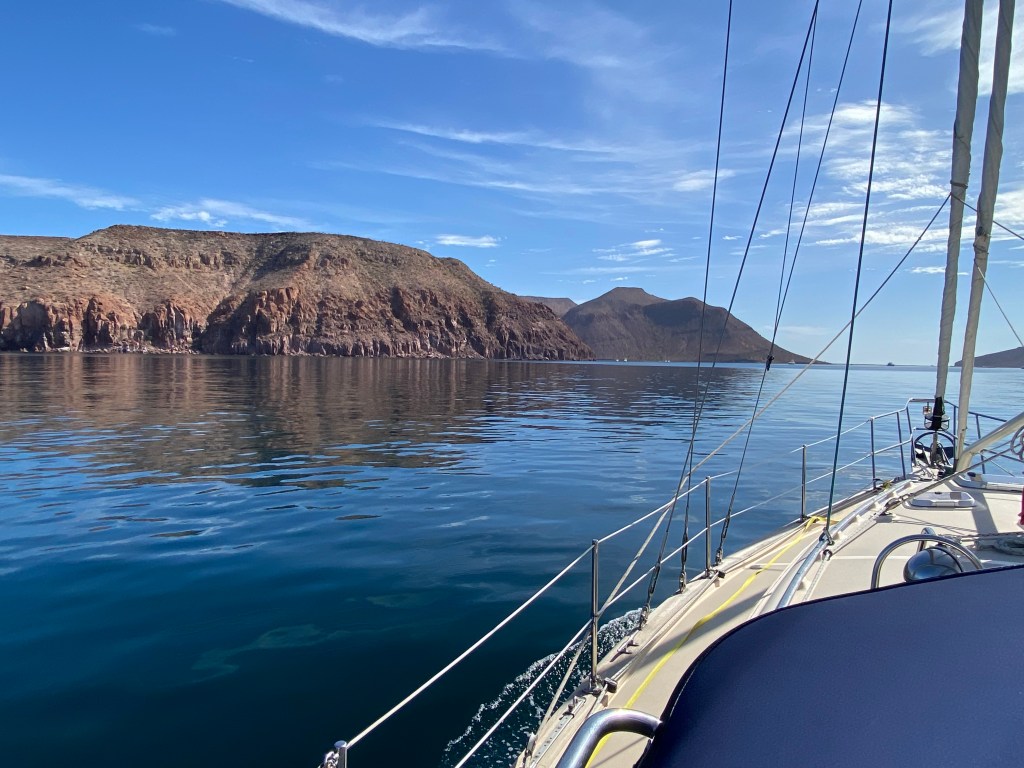
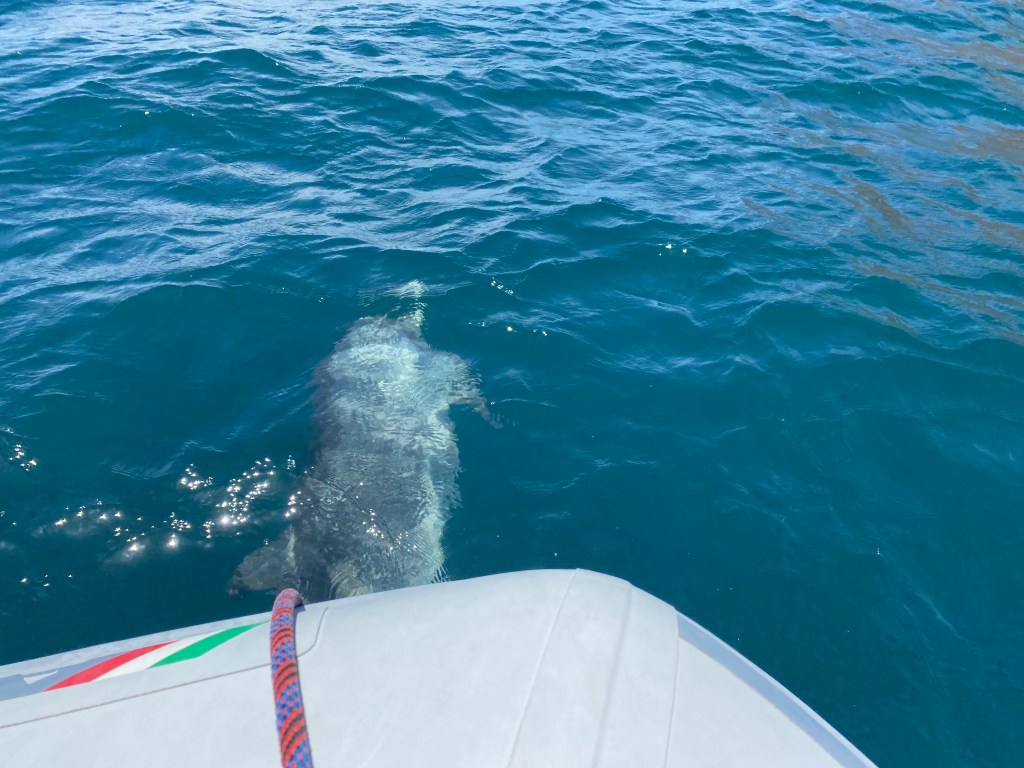
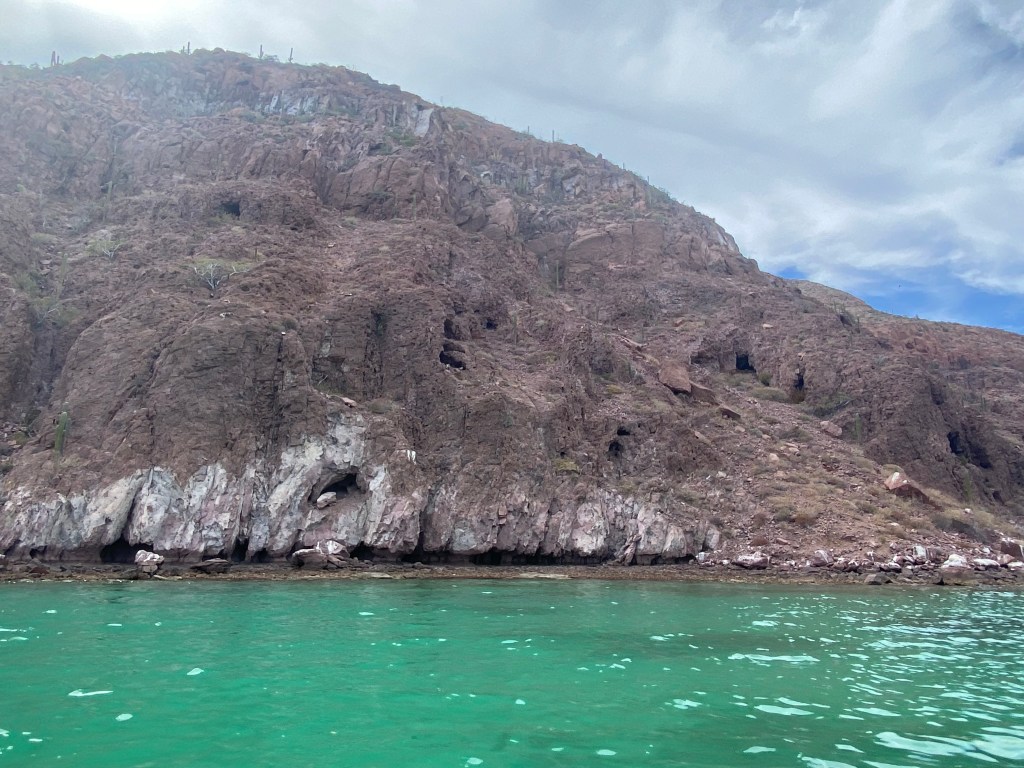
In the morning we made a quick hop up to Caleta Partida on Isla Partida, an island just barely separated from Isla Espíritu Santo to the north. We entered the anchorage, a crater of a large extinct volcano, with desert walls on either side that eventually came to a V where Partida is split off from Espíritu Santo. We anchored and set off on the dinghy to explore. We drove thru the split, referred to as the “back door”, and didn’t see anyone around the small fish camp on the beach. We drove out of the anchorage and into the next small lobe called El Cardoncito, a perfect little cove for one or two boats. We had three dolphins join us on the way and we were able to entice them closer by increasing our dinghy speed every once and again to catch their attention. There were 15 boats overnight at Caleta Partida, a slight wind coming through the split and only ripples on the water. It was a perfect one night stop over.
Isla San Francisco
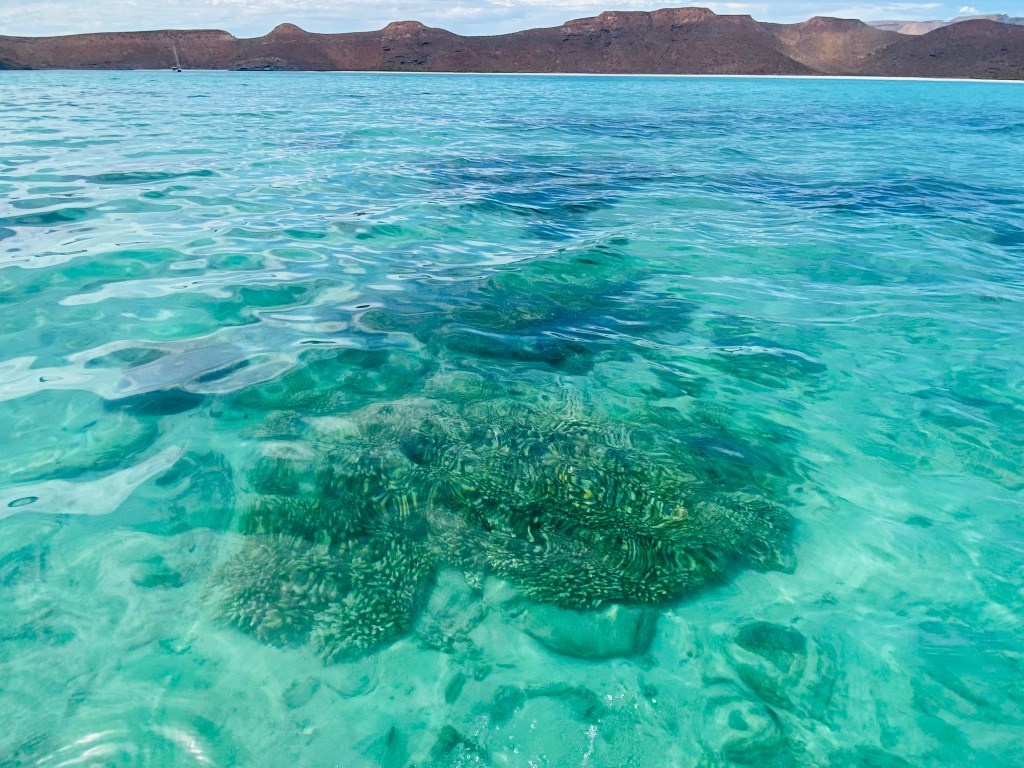
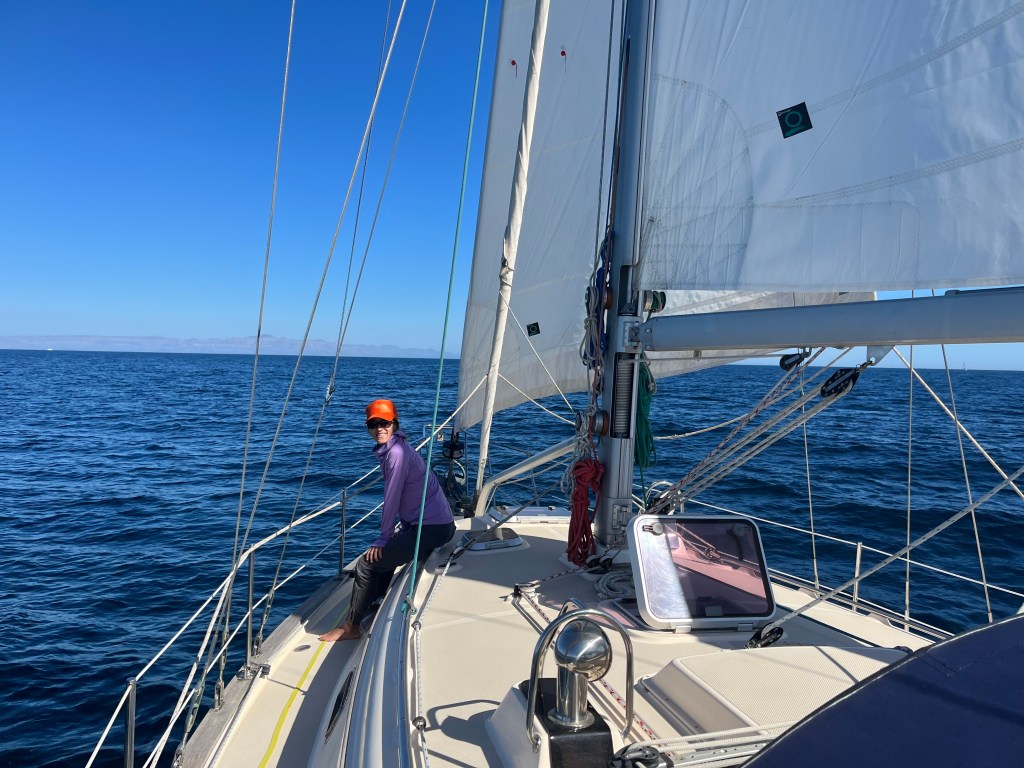
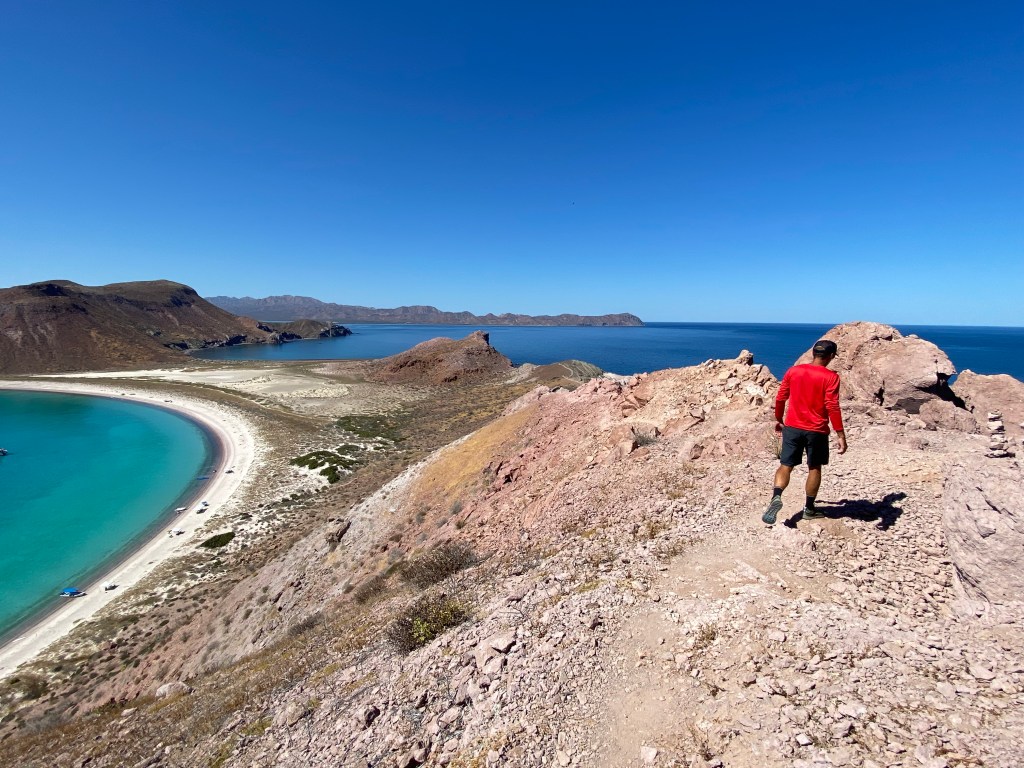
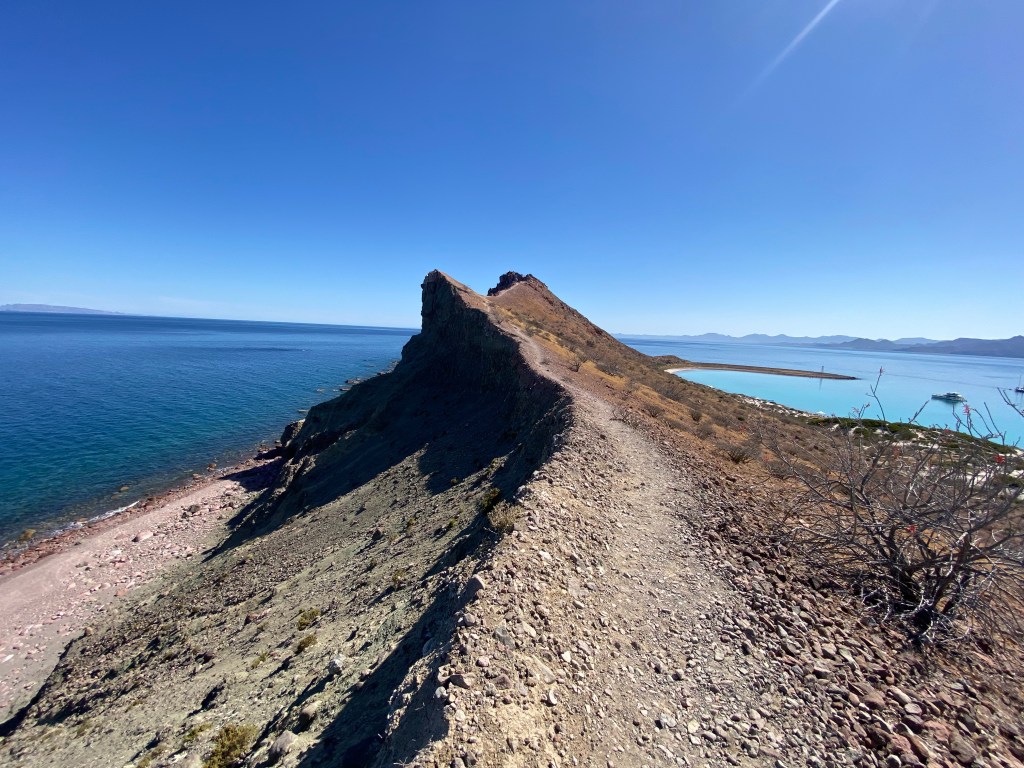
We headed 21 nm north to Isla San Francisco, one of the more popular anchorages in the southern Sea of Cortez due to its proximity to La Paz. It was Earth Day and we were happy to be able to sail for at least the first few miles. Unfortunately there was a bit of leftover chop from the last norther mixed with localized waves and wind from the opposite direction making for sloppy seas; none of which showed on PredictWind during our regular 12-24 hour checks. The anchorage at Isla San Francisco had more motor yachts and charter catamarans than any other of our previous stops. There were 18 boats, lots of bumping music and laughter coming from just about every direction. A fun and lively anchorage. In the clear waters we saw different shapes of small jelly fish. We swam and hiked the ridge above the anchorage. A few sailors made small fires on the beach as the music around us quieted down at sunset. During the night we woke up to heavy southerly winds, another forecast that was not picked up by PredictWind. The Isla San Francisco anchorage is wide open to the south, making it a less than ideal location for the unexpected southerly winds – which were a surprise to our neighbors as well. The regular rollers coming into the anchorage made it challenging to sleep and in the morning it was too rough to pull the anchor at sunrise so we waited a few hours before making a move. *So far we’ve learned that PredictWind is not very accurate for local winds in the Sea of Cortez. It seems to work well for larger weather and wind patterns but we are running into localized weather that at times is completely opposite of what PredictWind is showing.
San Evaristo
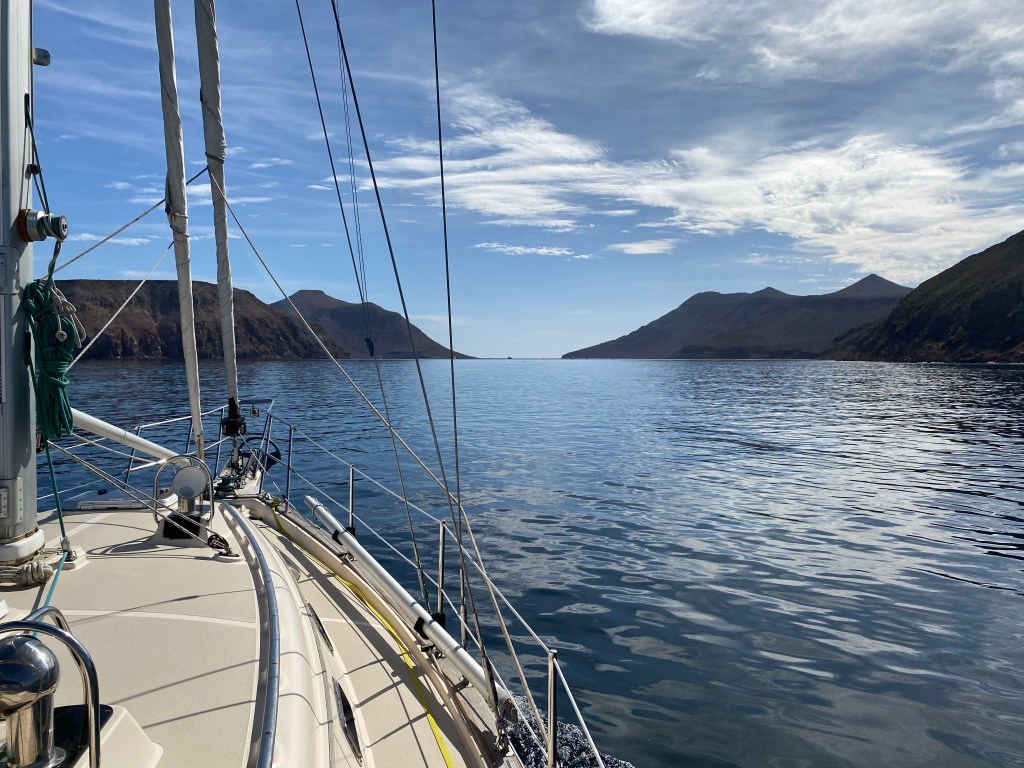
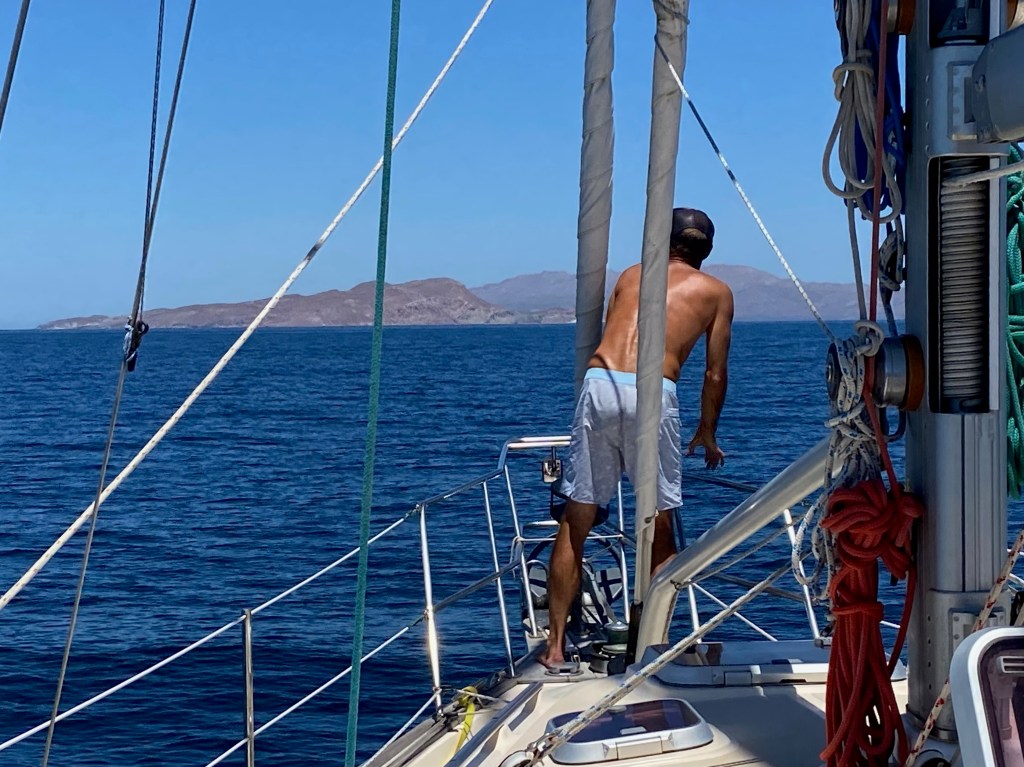
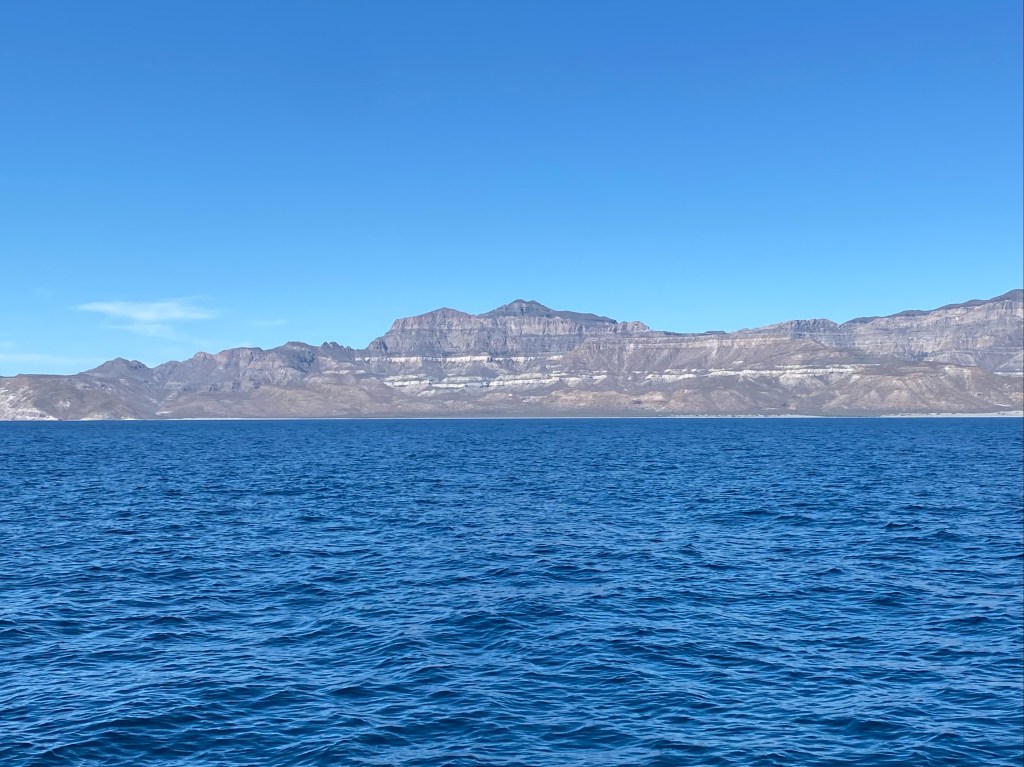
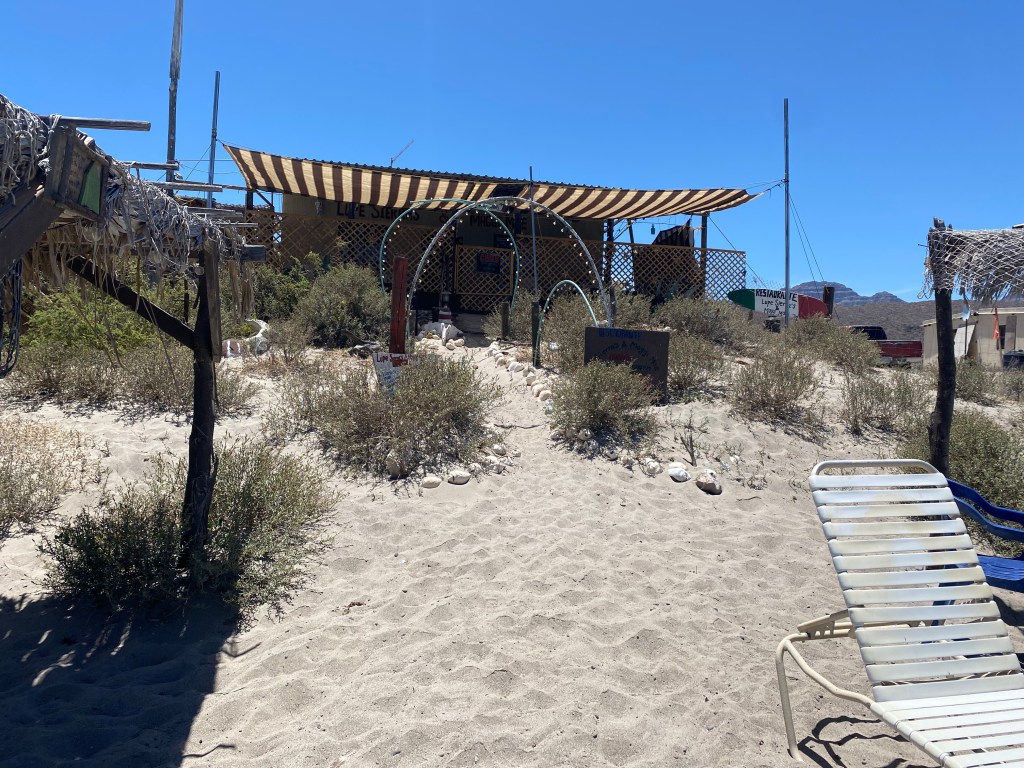
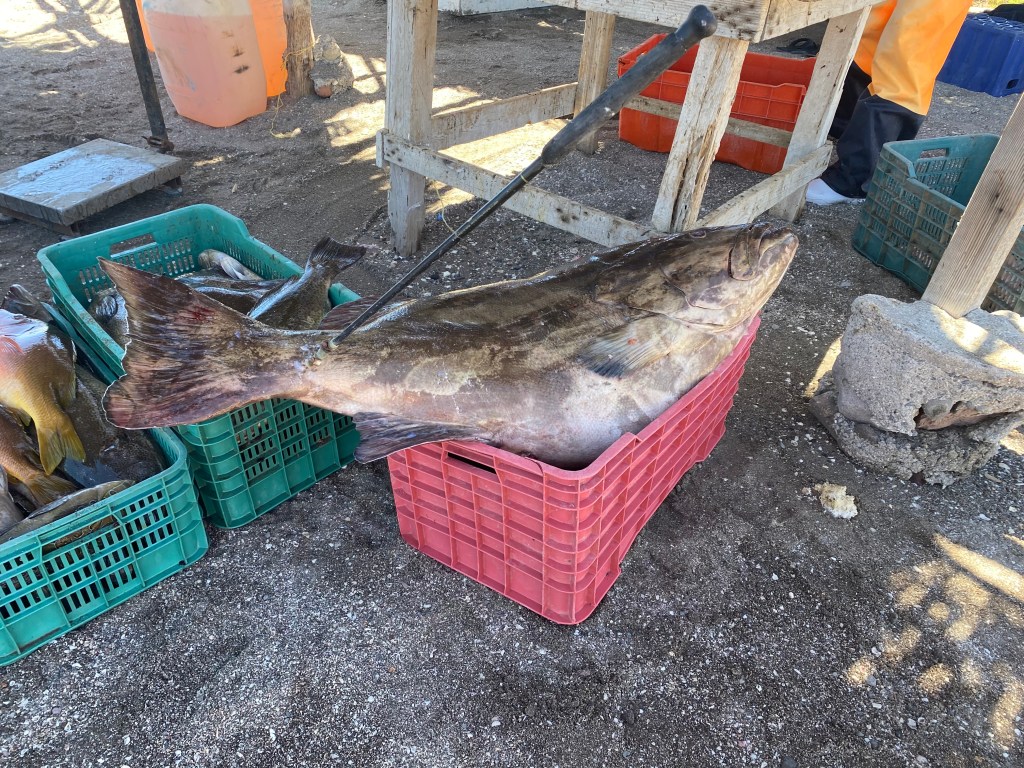
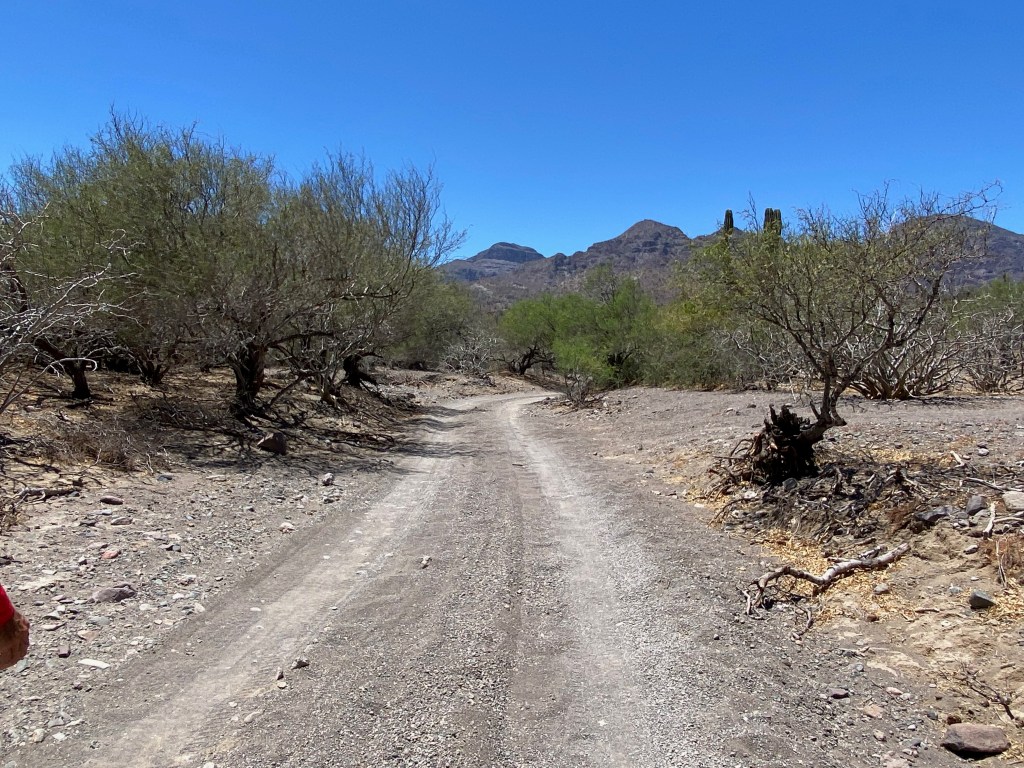
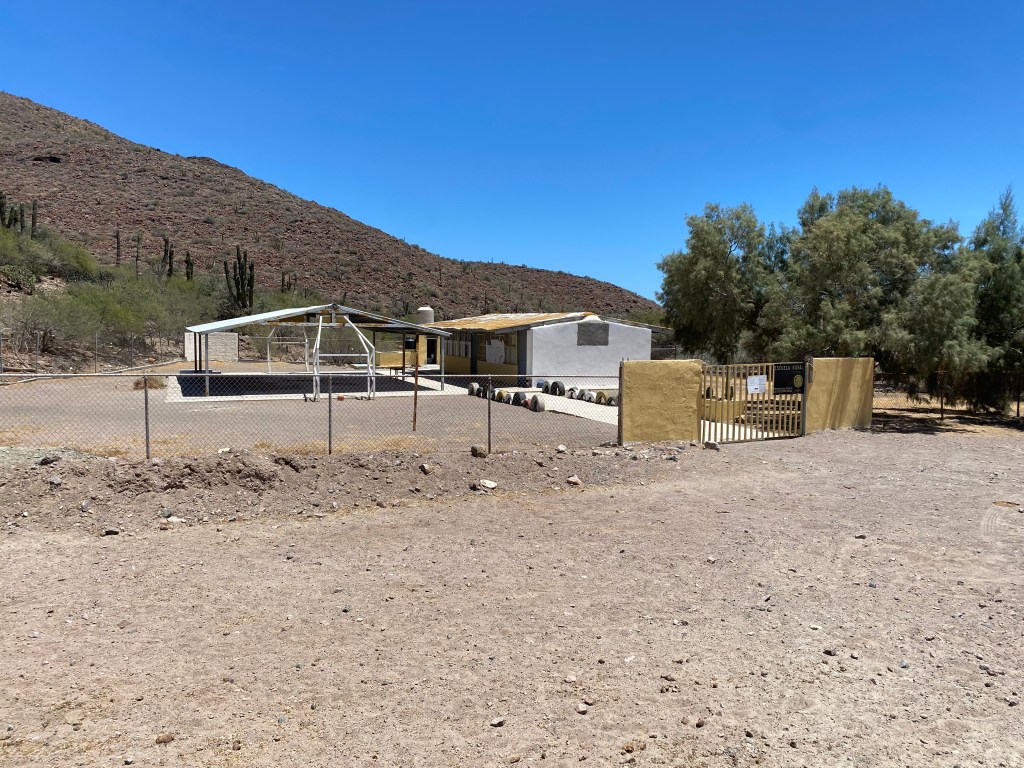
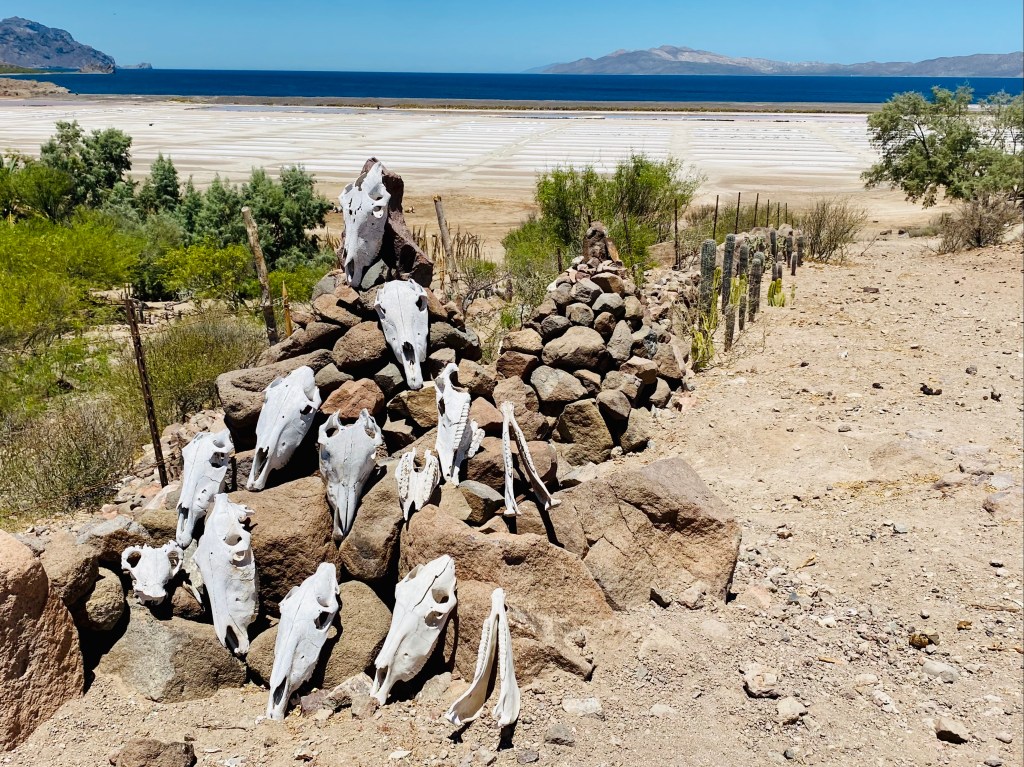
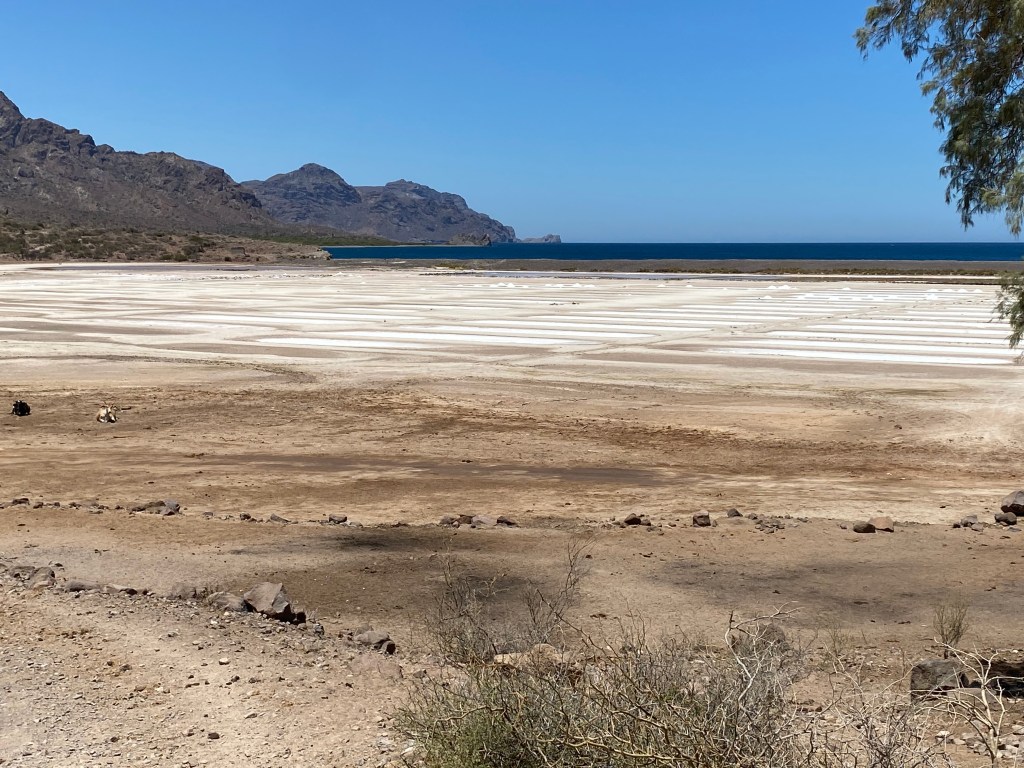
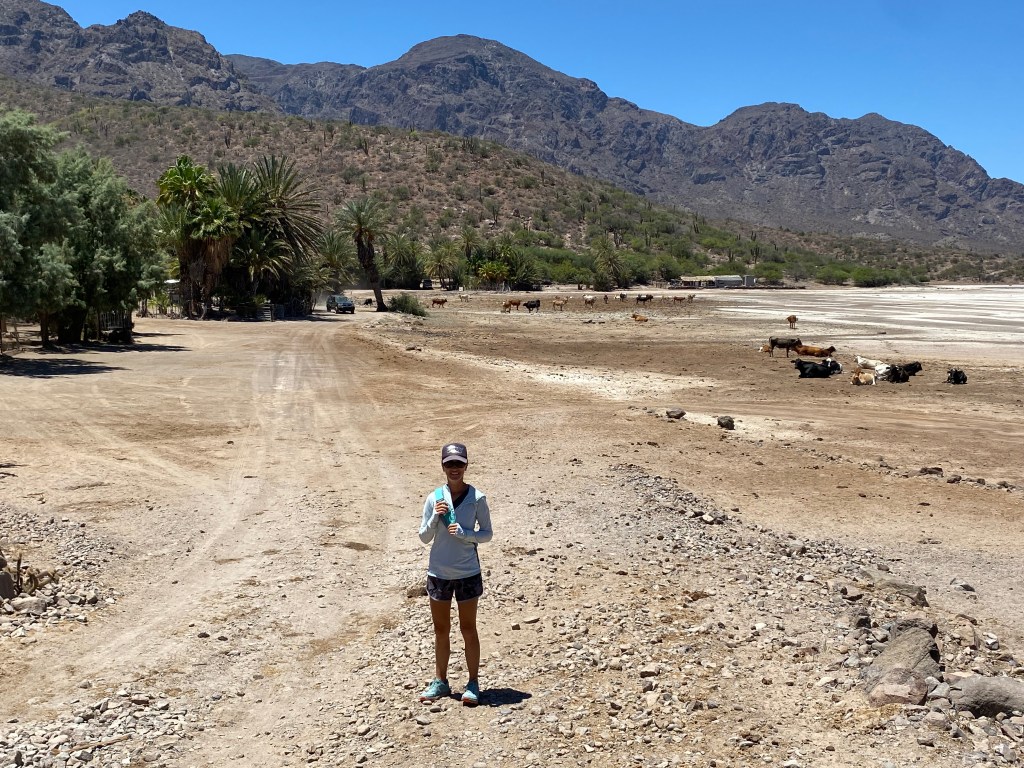
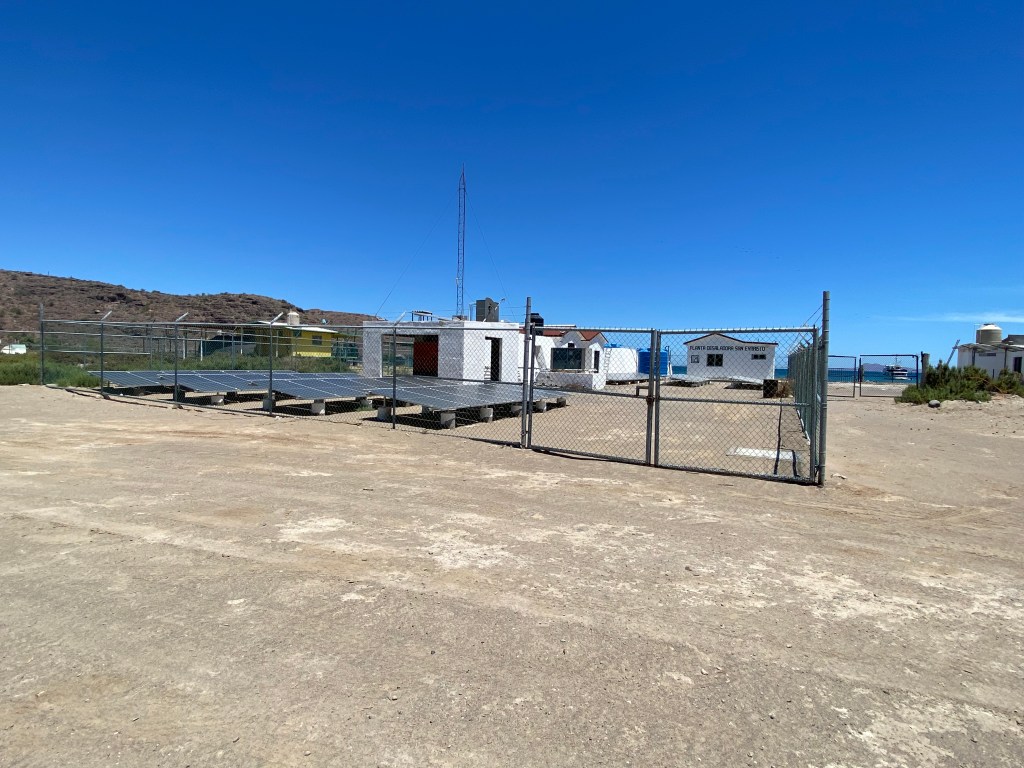
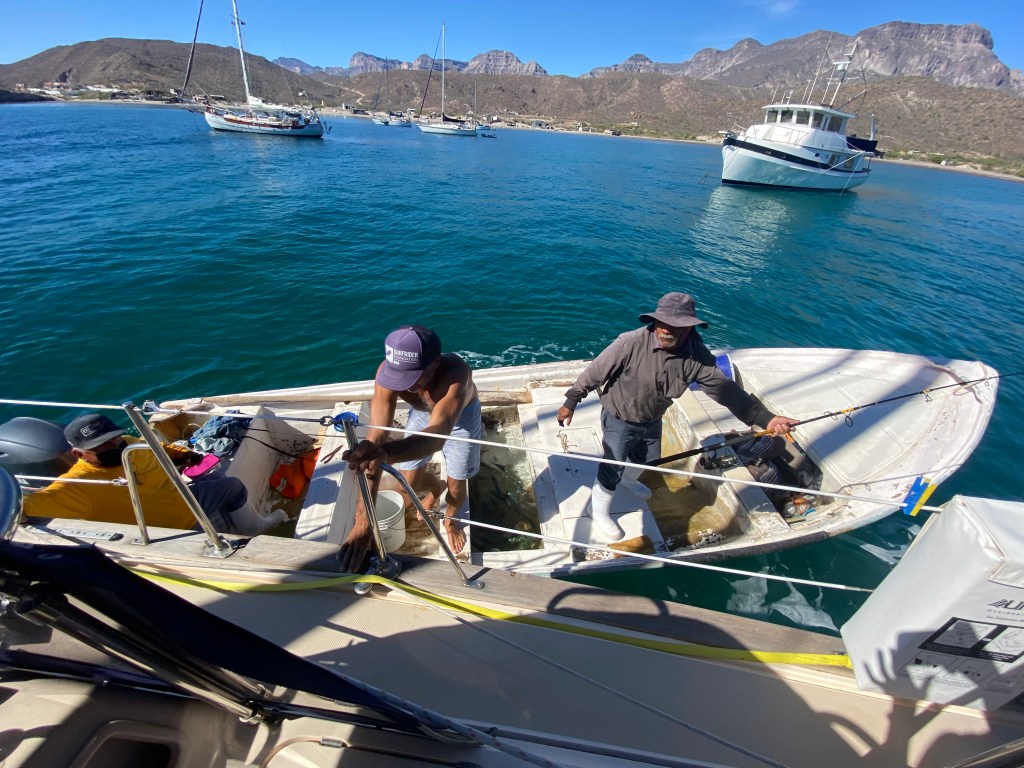
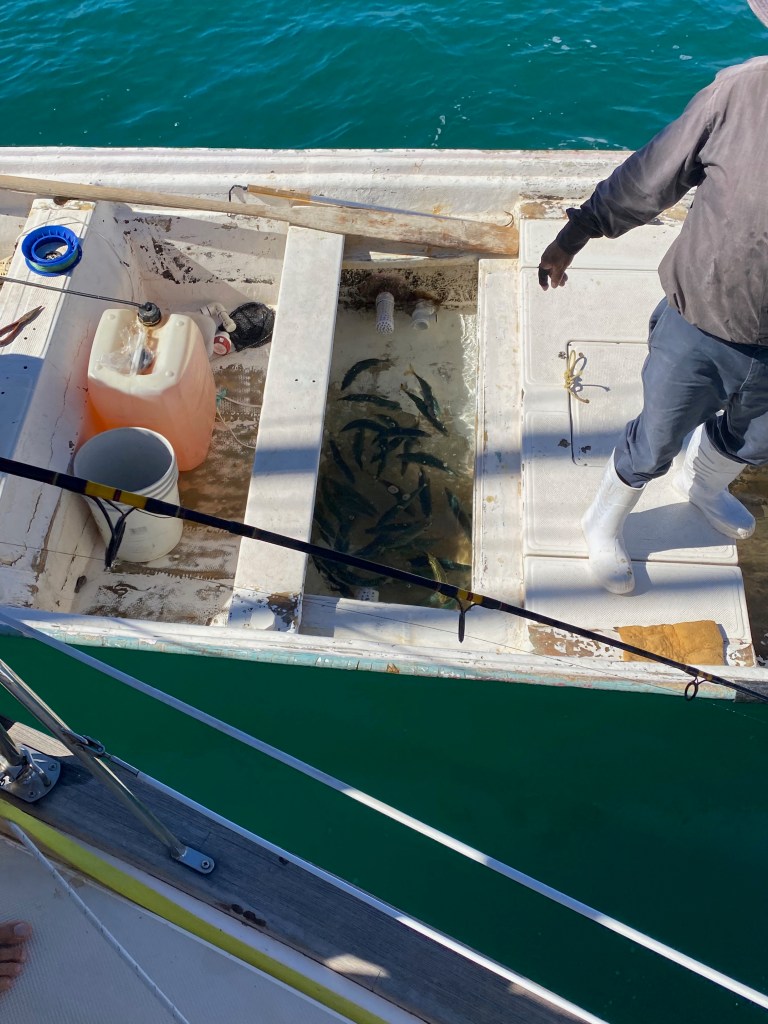
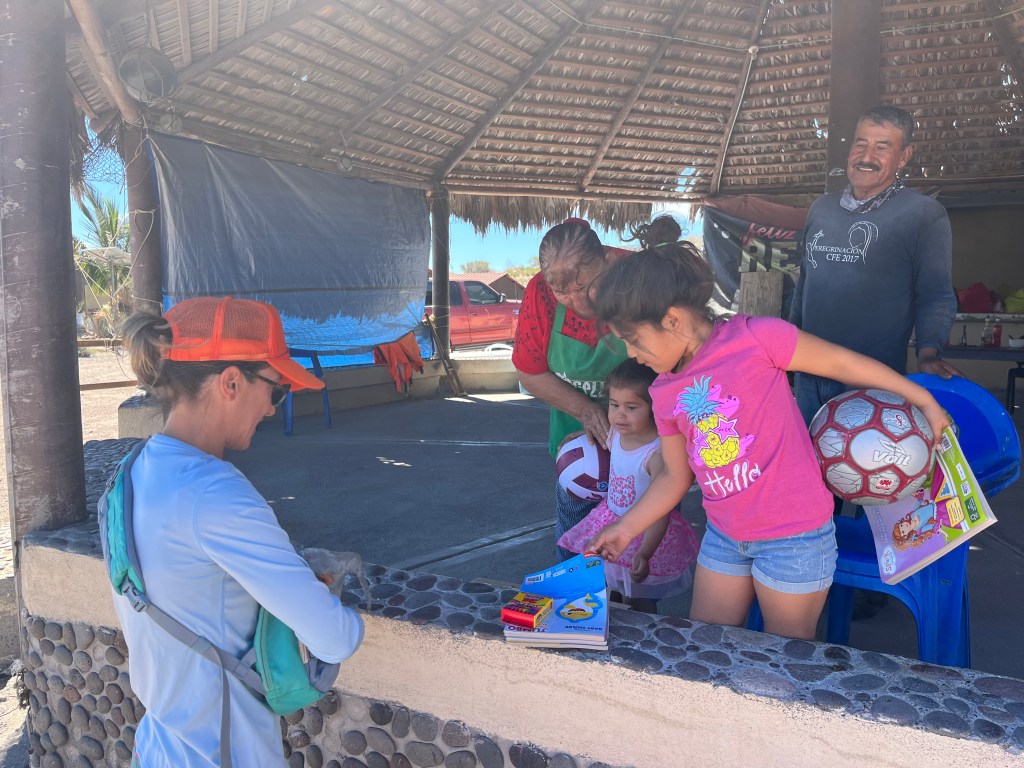
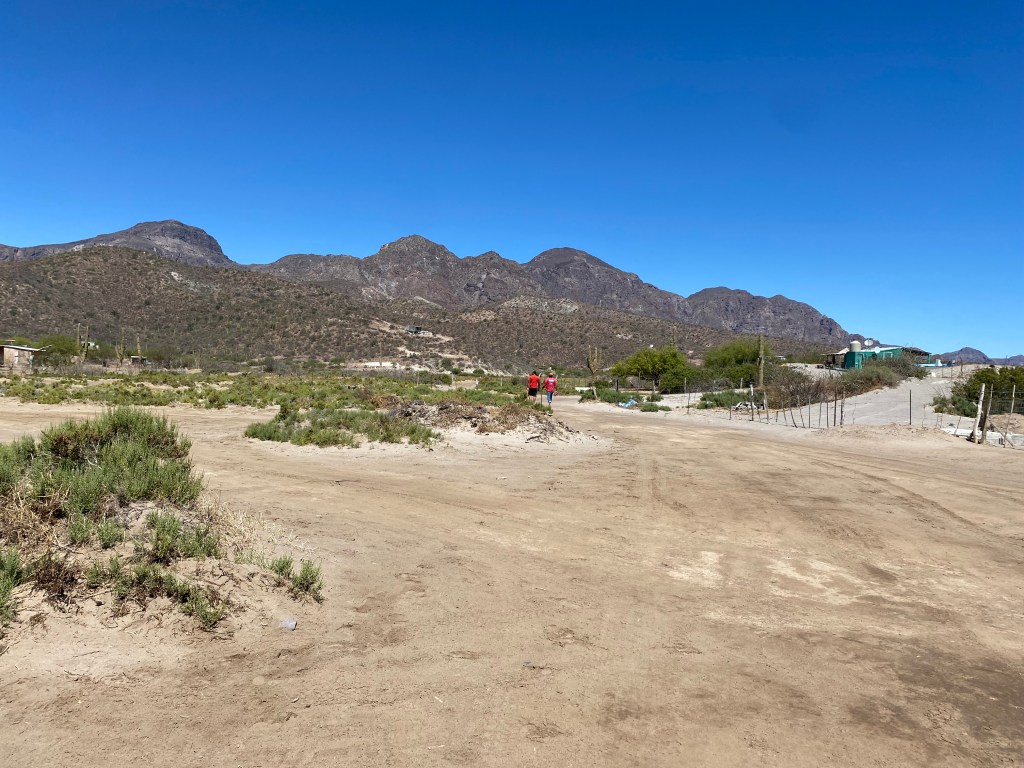
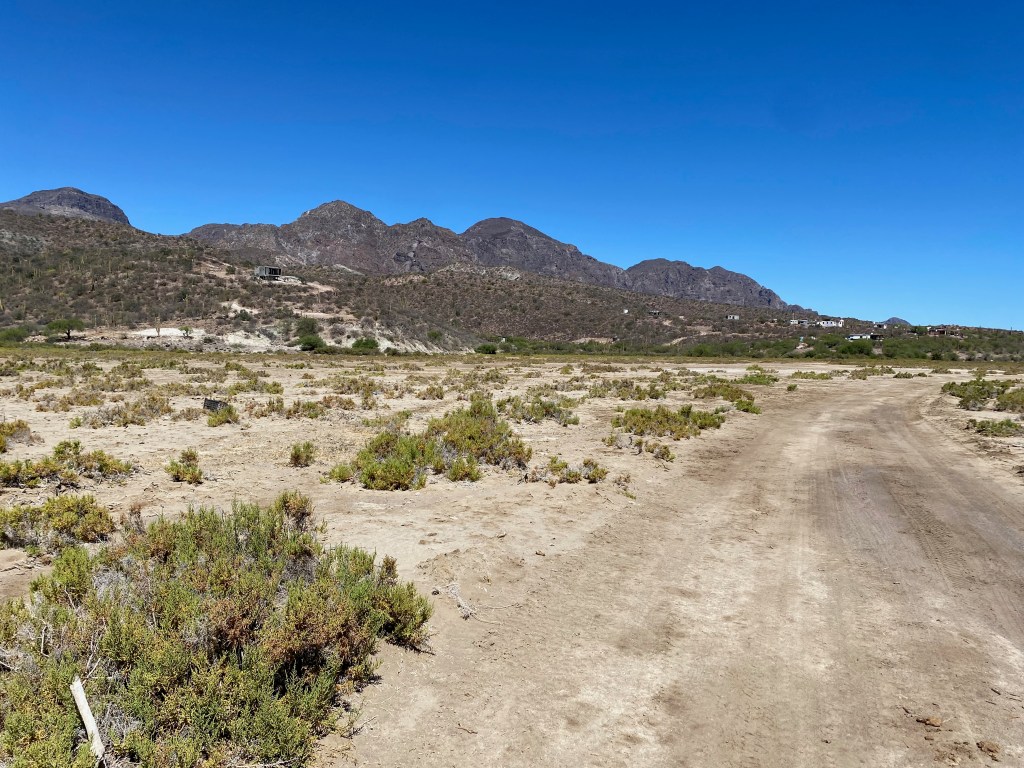
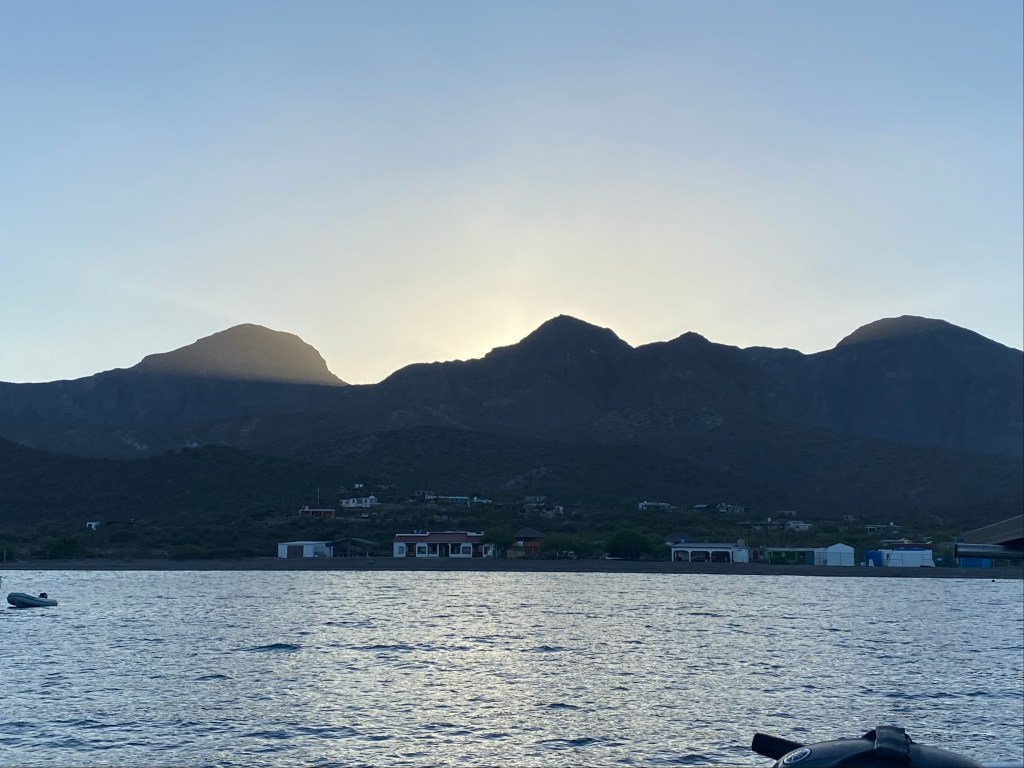
When we pulled anchor we headed north into the Canal de San Jose for a short, 9 nm hop to San Evaristo. The canal brings you up close to the Sierra de la Giganta mountain peaks ranging from 3800’ – 5000’ in elevation and dropping straight into the ocean. It is gorgeous. San Evaristo is a small village along the canal tucked into the base of the mountains with approximately 20 full time residents, a small church, one tienda, one restaurant, a modest school and a desalination plant for water. We anchored here for three nights. We walked the beach to a dirt road out of town and over a hill to the salt evaporation ponds. We saw herds of cattle walking themselves from one end of town to the other on the dirt roads. One morning Jim was invited to go fishing with two local fishermen on their panga and Lorin distributed coloring books and crayons to the local niños at their homes and a community space on the beach. Jim was able to help catch more bait fish using our Sabiki rig and gave his catch to the fishermen to use when they went out fishing that night. They were very appreciative and wanted to ensure we would be there in the morning so they could bring us fish fillets. It felt good to have a connection with the locals. We also met a group of men and women from the US who were sea kayaking from Loreto to La Paz over a 10 day period; besides the vigorous effort, given the recent sea state we were very impressed. Back at the boat during one of our regular engine checks, Jim found metal shavings below the engine and also noticed the V-pulley for the fresh water pump was wobbling when the engine was idling. With the help of our boat neighbor’s Starlink access, we were able to research the issue and also email photos to our mechanic in Mazatlan for his thoughts. Unfortunately, all responses pointing us 51 nm back to La Paz for repairs.



 SV Solitude